Saturday, 3 February 2024

Мерзость запустения

“Итак, когда увидите мерзость запустения, реченную через пророка Даниила, стоящую на святом месте, — читающий да разумеет”.


Пояснение: в моей работе я использую термин “вектор оставленности”. Этот вектор противоположен вектору привязанности и любви. Данные векторы присутствуют во всех человеческих действиях: векторы любви держат сотворенный мир вместе; векторы оставленности его разрушают. Иисус Христос – максимальный вектор любви, сама Любовь.


Нечто вроде знамения

Вчера, после Мессы в крошечной католической церкви, у меня случился странный опыт. Декларация “Fiducia Supplicans”, разрешающая благословлять гомосексуальные пары[1], вызвала у меня туманные мысли o “мерзости запустения”. Я словно бы мысленно увидела пару гомосексуалистов, стоящих здесь, в церкви (их силуэты на фоне витражей с изображениями Иисуса Христа, Богоматери, св. Иосифа и других святых и ангелов) и благословляющего их священника – и эта картина была абсолютно безумной. Я попросила Господа о вразумлении или знаке относительно “мерзости запустения”, потому что я боялась принять мои мысли за Его. В то время, как я молилась после Мессы, произошло нечто невидaнное мной: мальчик лет пяти, сын "католиков-традиционалистов", въехал в храм на... велосипеде! Он проехал прямо к алтарю и, словно бы этого было недостаточно, поднял свой велосипед, поставил его в алтарь и принялся кататься вокруг престола[2]. Его мать вбежала в храм вслед за ним, но недостаточно быстро для того, чтобы предотвратить его "въезд" в алтарь. Она звала его, но он не обращал на это никакого внимания, продолжая кататься за престолом с нахальной улыбкой на лице, так что матери пришлось вытаскивать его из алтаря силой. Я не слишком разглядела, как она она это делала; для меня главным был странный въезд в храм, а затем - катание вокруг престола.

Оборачиваясь назад, я думаю, что это было нечто вроде знамения - конечно, не мальчик как таковой был “мерзостью запустения” – а то, что его действия могли относиться только к не-алтарю и к не-церкви. Если бы он просто вбежал (а не въехал на велосипеде) в алтарь, чтобы что-то рассмотреть (как это иногда случается; например, маленькие дети периодически пытаются вползти в алтарь во время богослужения), это было бы совсем другим, довольно нормальным, событием. Но нет, он катался в алтаре, словно бы это был не алтарь и не храм.

Сегодня, когда я опять пошла к Мессе, у меня было тяжелое, но отнюдь не туманное, чувство. Я ощущала некое темное присутcви в углу алтаря или в Церкви как таковой. Это снова была та самая не дающая мне покоя “мерзость запустения”. Я опять мысленно увидела гомосексуальную пару, благословляемую перед алтарем. В сегодняшем Евангелии читались слова Христа “[любой], кто будет исполнять волю Отца Моего Небесного, тот Мне брат, и сестра, и матерь.” Эти слова словно бы ударили меня. "Волю Моего Отца"! Внезапно я ощутила, что недавнее действие Католической Церкви, публикация документа, разрешающего (читай “обязывающего”) благословлять однополые пары и нарушающая волю Бога как она выражена в Божественном откровении (Писании и Предании), сводит на нет все, что происходит в церкви. У меня было сходное, но не столь сильное чувство после обнароднования государственной комиссией множества фактов былого сексуального насилия над детьми и его покрывательства в местной епархии - и, самое главное, встреченных мертвым молчанием пастырей и прихожан. Одно из ощущений, перерастающим в уверенность, было, однако, идентичным: я ощущала, что служение Мессы священником и прихожанами как ни в чем ни бывало, как раньше, словно бы не было ни обнародования позорных фактов сексуального насилия над детьми, ни позорной “Fiducia Supplicans” – т.е. притворяясь, что все в порядке и не обронив ни слова о том, что происходит – это молчание словно бы опустошало Мессу, в каком-то смысле делало ее нереальной. Я почувствовала тошноту и начала думать, были ли теперь в Евхаристии реальные Тело и Кровь Христовы. Мне стало ясным, что только открытое “нет” “Fiducia Supplicans” местной церкви могло бы меня успокоить относительного реальности Тела и Крови – я имею в виду не доктрину, а реальность Евхаристии в каждой церкви, хранящей молчание о “Fiducia Supplicans”.

Святое расщепление

Наконец-то я, кажется, поняла что такое “мерзость запустения”, в храмах Святого Духа. Мерзость запустения не может быть достигнута посредством ясного и прямого отрицания воли Божией выраженной в Его словах, а затем делания того, что хочется. Мерзость запустения – это громкое чтение этих самых слов в Церкви, целование Слова т.е. содержащей их Библии, их проповедь, причастие Слову т.е. Христу в Евхаристии, а затем делание того, что хочется, в окольной, лживой, предательской, форме в той же самой Церкви – например, насилие над детьми или благословение однополых пар. Это + и - которые производят 0, ничто, запустение в храме Святого Духа и всей Церкви.[3]

Thursday, 25 January 2024

Abomination of desolation

“Therefore when you see the abomination of desolation spoken of by the prophet Daniel, standing in the holy place (let the reader understand)”.


An explanation: in my work I use the term “vector of abandonment”. This vector is the opposite of a vector of attachment and love. Those vectors are present in all human actions: vectors of love are holding the creation together; vectors of abandonment are destroying it. Jesus Christ is the ultimate vector of love, Love itself.


A kind of a sign

Yesterday I had a strange experience in the tiny Roman Catholic chapel after Mass. I have had murky thoughts about “abomination of desolation” after ‘Fiducia Supplicans’, a declaration that allows blessing of homosexual couples, came up[1]. In my mind I “saw” a homosexual couple standing there in the church (their silhouettes against its interior with Jesus Christ, His Mother, St Joseph and saints and angels depicted on stained glass windows) being blessed by a priest – and that sight was absolutely mad. I asked Our Lord for a sign re: “abomination of desolation” because I did not want to be presumptuous and take my thoughts for His. I was praying after Mass when suddenly something that I have never witnessed before happened: a five-year old child of some “traditional Catholics” rode into the church… on his bicycle! He rode straight to the sanctuary and, as if it was not enough, picked up his bicycle, put it into the sanctuary and began riding there. His mother came after him but not quick enough to prevent his entrance into the sanctuary. She called him yet he did not care – he was riding there behind the altar with a defiant smile so she had to pull him out of there. I did not really see her removing him, to me the event i.e. what I saw clearly was a strange ride into the Church and then – around the altar.

Looking back, I think it was a kind of a sign – not that a child himself was “an abomination” of course – but that his actions could be done only in a non-sanctuary and non-church. Indeed, if he just ran (not cycled) in for the purpose of looking at something (as children do sometimes, crawling into the sanctuary) it would be entirely different and quite normal. No, he was riding as if it was not a church at all.

Today, when I went to Mass again, the feeling was heavy and clear. I felt a presence of something dark in the corner of the sanctuary or in the Church as such. It was that “abomination of desolation” in question. I again “saw” in my mind a blessing of homosexual couple before the altar. Today’s Gospels reading contained the words of Christ “whoever does the will of My Father in heaven is My brother and sister and mother”. I felt as if something hit me hard. “The will of My Father!” Suddenly I felt that the most recent action of the Roman Catholic Church, the document that allows (read “obligates”) blessing of homosexual couples, being a violation of God’s will as it is expressed in the divine revelation nullifies all that is happening in the church. I had a somewhat similar feeling after the extent of “historical” child sexual abuse in the local diocese was uncovered by the Royal Commission and, most pivotal, met with the dead silence of the congregation – but not nearly as strong. One realization was identical though: I felt that it was precisely carrying on Mass as before, by a priest and by parishioners – before the scandal of child sexual abuse and before the scandal of ‘Fiducia Supplicans’ – i.e. pretending that all is OK, with no word about what was happening – that silence was emptying the Mass, making it unreal in some sense. I felt nausea and wondered if the Eucharist was the true Body and Blood of Christ now. It became clear to me that only an open rejection, by the local church, of the heresy of ‘Fiducia Supplicans’, could put my mind at rest regarding the reality of the Body and Blood – not as a doctrine but in each church silent about ‘Fiducia Supplicans’.


Holy splitting

At last, I seem to have understood what “abomination of desolation” is, in the temples of the Holy Spirit. Abomination of desolation cannot be achieved via a clear and straightforward rejection of the will of God = His design as it is expressed in His words and then doing what one wants. Abomination of desolation is reading those words aloud in the Church, kissing the Word, the Bible which contains them, preaching them, partaking the Word, Christ in the Eucharist and then doing what one wants, in an oblique, deceitful, lying way in the same Church – like abusing the children or blessing homosexual couples. It is + and – which make 0, nothing, desolation in a temple of the Holy Spirit[2] and the whole Church.

Sunday, 11 September 2022

The Sacred Heart of Jesus

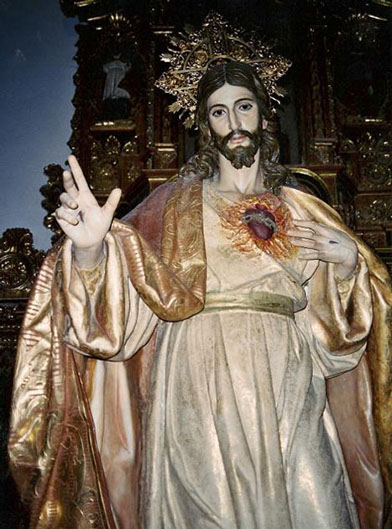
I first saw the statue of the Sacred Heart of Jesus in France, I think. Soon I was to see many of them; almost any Catholic church I went into would have one. Although I perceived that image as somewhat weird (for an Eastern Orthodox), with a three-dimensional heart sitting on the chest, I was drawn to it somehow.  

An Eastern Orthodox typically objects the devotion to the Sacred Heart on the grounds that a heart is a part of the body and we are devoted to the whole Christ (to venerate a bodily part is a kind of heresy some say). I must say the objection made a sense to me, although not for the theological reason but because the heart of Jesus, being venerated separately from Him, did not work for me psychologically. My attitude changed when I read the words of Christ addressed to St. Margaret Mary Alacoque (1647-1690, France) in a vision of Him with His heart being visible:

“Behold the Heart which has so loved men that it has spared nothing, even to exhausting and consuming Itself, in order to testify Its love; and in return, I receive from the greater part only ingratitude, by their irreverence and sacrilege, and by the coldness and contempt they have for Me in the Eucharist.”


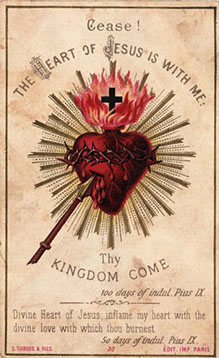
Then I understood that the Heart depicted outside of the body, pierced and squeezed by the Crown of Thorns, with the Cross on the top of it aflame and with the rays of light coming from it is simply a symbolic expression of the emotional suffering of the Son of Man caused by His love for us and not just that –
it is an invitation to the painfully (for the human with a heart) real relationship with Him. It is a symbolic expression of the Love of God Who suffers because His Sacrifice, made out of His burning love for the humanity, has been rejected, mocked, ignored or otherwise abused by most. It is an utmost expression of the vulnerability of God, God Who can be vulnerable only in Incarnation.[2]

Precisely because in the Person of Christ both Man and God are vulnerable it is so important for the statue of the Sacred Heart not to be sweetly sentimental, I think. Far from conveying “sweetness”, it is supposed to convey the pain of the Man and the pain of God Who has exhausted all means for winning the love of His creatures and yet is still being denied by so many. There is nothing left; God died so that men could live and nothing can be added to that fact. One can detect an anger in the words of Christ to St. Margaret Mary Alacoque – again, very understandable anger at the loss of the souls and possible relationships – all that despite the bloody Sacrifice.


I would like to highlight a very human aspect of the message given by the Son of Man to the French mystic. It is entirely normal, for a human psyche, to love and to desire reciprocal love; it is normal, when one loves someone, to wish for them all possible good and to try to save them from a mortal danger; it is normal to be beside oneself if one sees that the other is turning his back on the sacrifice which is also the means of their salvation from the eternal death. Finally, it is normal, for a normal man, to reveal his vulnerability, to risk, stating his love and revealing his pain at the loss. Yes, Jesus as He is depicted on the image of the Sacred Heart is risking to bring even more mockery and spite upon Himself – if He is God how can He be like that? Isn’t God is supposed to be far above, not “needing” anything, not heartbroken or at least not exposing Himself like that?

Monday, 27 December 2021

Се, творю все новое


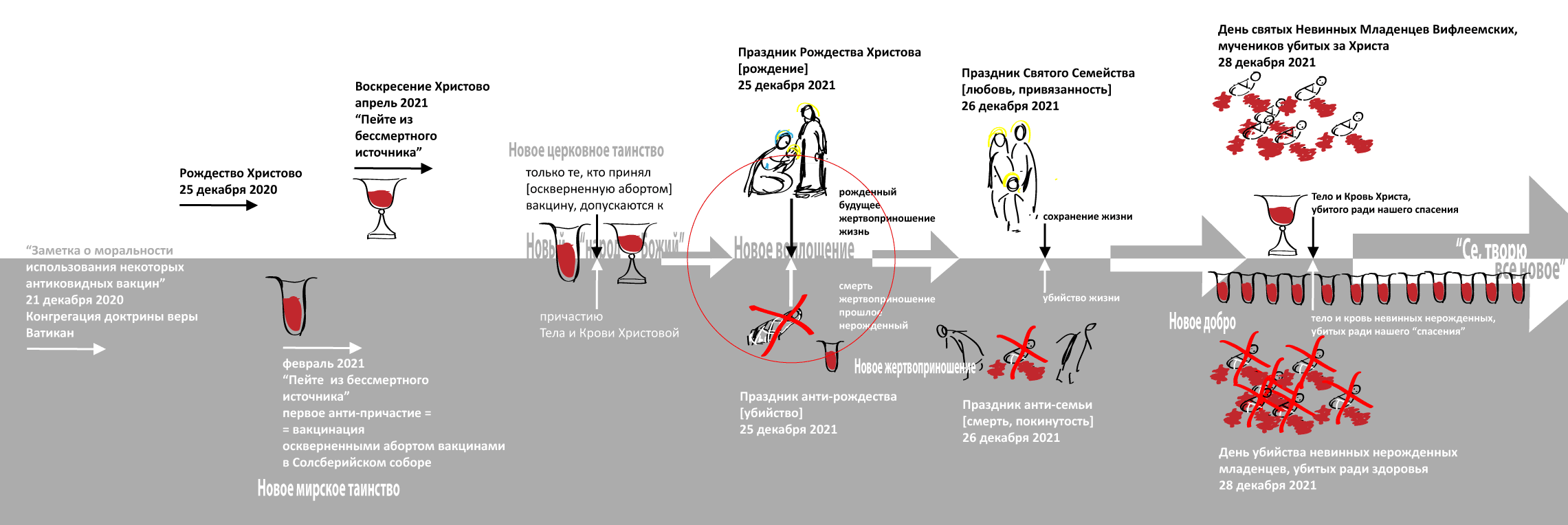
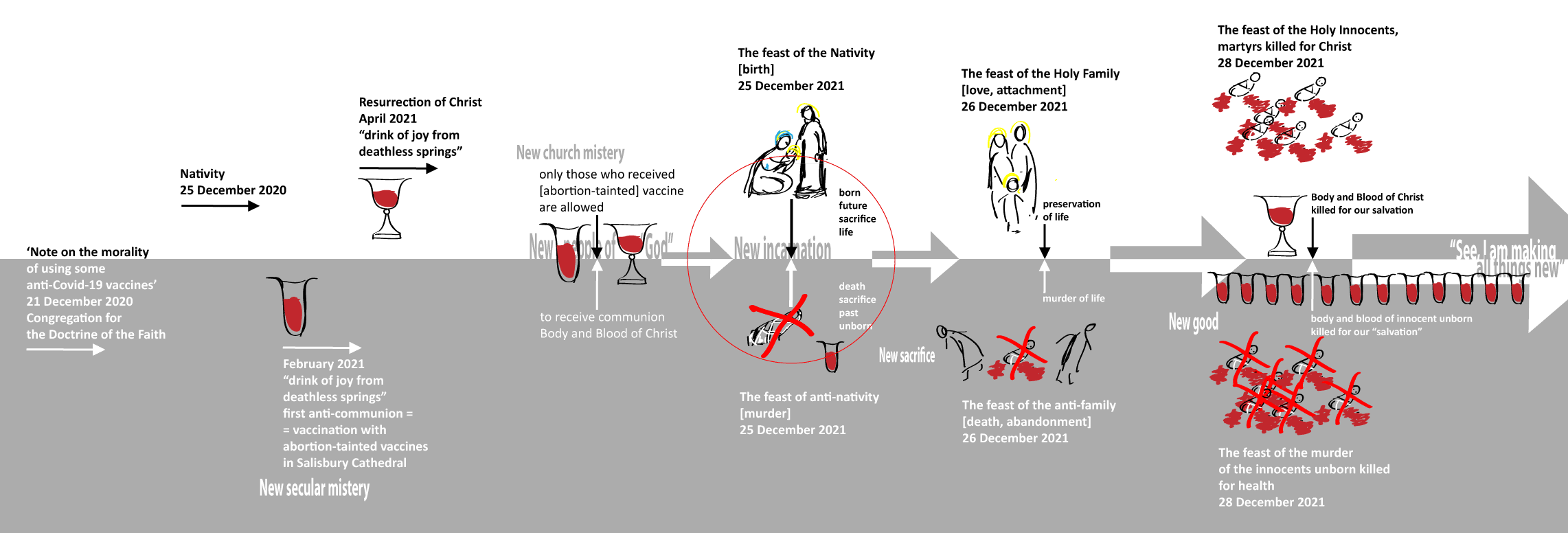
Комментарий к диаграмме

В феврале этого года я написала эссе Причастие оставленности о процессе трансформации вакцины в некое квази-причастие, в нечто, ставшее возможным только посредством запрета христианам доступа к настоящему причастию, Телу и Крови Христа. В нем я упомянула об одном особенно выдающемся случае раздачи вакцин, организованном в Солсберийском соборе. Мало того, что собор открыли специально и только для этого (после того, как много месяцев он простоял закрытым для верующих) – раздача вакцин происходила под аккомпанемент церковной музыки, включая евхаристические песнопения; таким образом, процесс вакцинации сделался исключительно торжественным и приобрел вкус участия в некоей мистерии.

С февраля 2021 процесс включения вакцин в жизнь Церкви сильно продвинулся. До этого некоторые церкви, отменяя богослужения с участием прихожан, всего лишь предоставляли свои здания для масс-вакцинации. Т.е., люди (любые люди – как христиане, так и не христиане) могли получить оскверненную абортом вакцину[1]в храме. В настоящее время, во многих местах некоторые епископы установили правило, согласно которому только принявшие вакцину могут участвовать в Литургии и принимать причастие и другие таинства Церкви. Обычно это делается под предлогом “вакцинируйся ради блага других, из христианской любви к ближнему”. Вылущенная из оболочки “благости”, суть призыва состоит в “прими оскверненную абортом вакцину для того, чтобы ты смог получить Тело и Кровь Христовы”.

See, I am making all things new


A brief comment to the diagram

On February this year I wrote the paper ‘A communion of abandonment’ about the process of transformation of a vaccine into a kind of communion, something that was only possible via baring Christians from access to the true communion of the Body and Blood of Christ. There I mentioned a particularly remarkable case of distribution of the vaccines, staged in the Salisbury Cathedral. Not only the Cathedral was opened for that purpose (after being closed to the faithful for months), the distribution of the vaccines was accompanied by liturgical music including Eucharistic hymns; the whole process thus was very solemn and acquires the ‘taste’ of participation in a mystery.

Since February 2021 the process of incorporating the vaccine into the life of the Church has much advanced. Before some churches, while suspending their public Masses, only volunteered their buildings for mass-vaccination. Meaning, that the people (any people, Christian and non-Christians) could receive the abortion-tainted vaccines in the church. Now, in many places, some bishops made it conditional for Christians to receive the vaccine first, to be able participate in the Liturgy and to receive the sacraments. It is usually done on the pretext of “vaccinate to be good to the brethren, out of Christian love”. Being stripped of niceties, the gist of the message is “receive the abortion-tainted vaccine so you could receive the Body and Blood of Christ”.

Friday, 21 May 2021

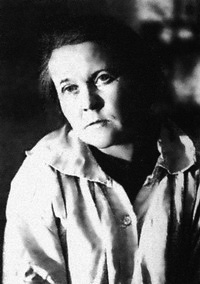
Sister Ioanna Reitlinger: the bequest of an iconographer (1980s)


Because I have received no formal education in philosophy and art history (but had to attain everything on my own via reading and studying in museums) it is difficult for me to write this little addition and find suitable terminology. Nevertheless, because over my long life I have acquired an experience in this area I simply want to share my thoughts, in the hope that my learned friends will understand me and may later on help to discern the problems which I raised.

Since the primitives and, in particular, the ancient Russian icons were discovered (by “discovered” I mean not just “cleared from the newer layers of paint during restoration” but “understood” and “valued”) and people began painting new icons in that discovered “style” many make a mistake: they do not consider enough the vast diversity of approaches to icon painting over centuries. To see what I am trying to say one can compare the icon ‘Our Lady Vladimirskaya’ XII c. with ‘The Holy Trinity’ by Rublev. Yes, there is the same principle there, but there is also an enormous difference or at least huge.

And now some of our contemporary iconographers (unfortunately, I live in isolation so know very few), after choosing a particular single period in icon painting as a model for imitation, consider all other attempts which differ from theirs as “not icons” (or not canonical – A.T.).

Usually those who nowadays are engaging in icon painting take for their example the time when the style was already very well-developed and even over-developed, being on the boundary with decadence and having much of the aestheticism that I, to a degree, oppose to the religious content of an icon and to its sincerity. Because this boundary is so very fragile it is even more dangerous to take such a style (overdeveloped to the point of decadence) as an example and compass.

It seems to me that the ancient epochs with their realism are much closer to our religious psychology – I would not be afraid of the word “realism” here – but I must stop to clarify its meaning and even more so the difference between symbolism and stylization. Art in its very nature is symbolic and the icon, because of its task, is even more symbolic (here one can speak about a kind of “real-symbolism”). It is precisely when the icon departs from this real-symbolism as the method of expression that it departs from its task or purpose.

An iconographer must be shot first

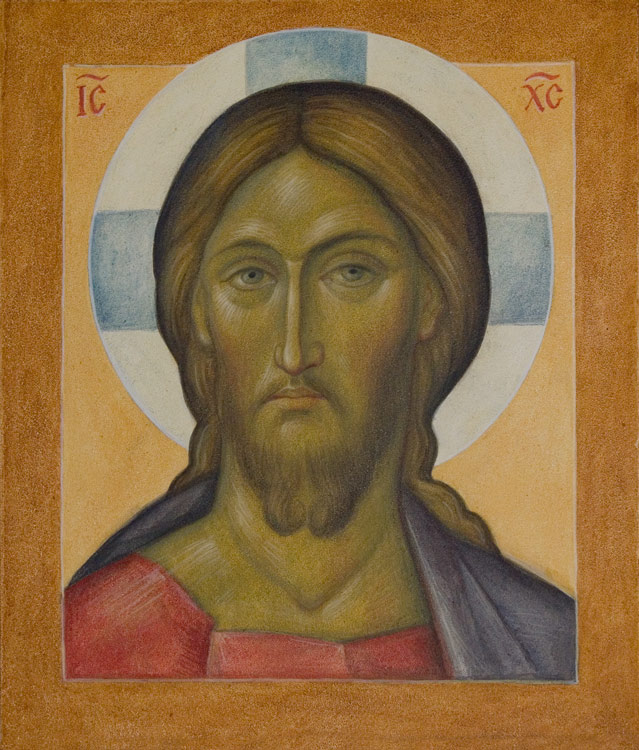
This little paper is the result of being requested to write “a short piece that brings Christ alive for us [Westerners] in the icon”. I deliberately quoted the exact words because they provide “a springboard” into what icon is, what is not and what to do with it.

I cannot fulfill the request “to bring Christ alive for someone”. Objectively speaking, Christ does not need to be brought alive because He is alive, He is the Life itself. “Come and drink all of you who are thirsty, from the Source of immortality”. Yet, subjectively/paradoxically Christ is dead for all who do not wish to relate to Him. Hence, I am unable to make Him alive for anyone (including on an icon) no matter how eloquently I speak of Him or of the mystics who loved Him or of how “lively” I paint Him. Ultimately, it is between Christ and the soul. Jesus Christ becomes alive for someone in the moment when someone turns to Him in response, as a person to the Person (very much like to another human being). This is what the icon is for – being a representation of the Person (of Jesus Christ or His Mother or a Saint) it invites a response from the other. And an icon is an invitation to the most intense personal relationship imaginable, the witness of what Christianity is all about. I have not read about that elsewhere but I feel that an icon is the essence of what personhood is, the essence which is possible to depict using symbolic realism (an icon is both realistic and symbolic).


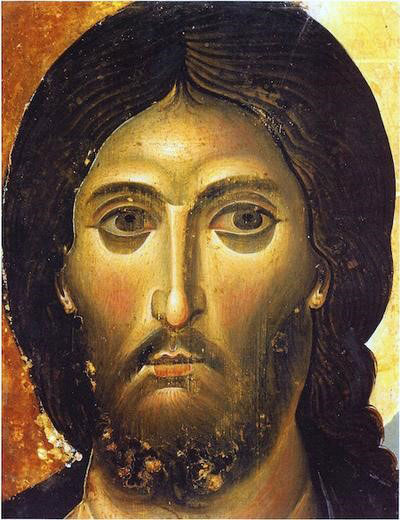
Christ Pantocrator, icon, Saint Catherine's Monastery, Sinai, 13 c.

Wednesday, 10 February 2021

Причастие оставленности


Символ веры

Верую в Бога, Отца Всемогущего, Творца неба и земли.
И в Иисуса Христа, Единственного Его Сына, Господа нашего, Который был зачат Святым Духом, рождён Девой Марией, страдал при Понтии Пилате, был распят, умер и погребён, сошёл в ад, в третий день воскрес из мёртвых, восшёл на небеса и восседает одесную Бога Отца Всемогущего, оттуда придёт судить живых и мёртвых.
Верую в Святого Духа, Святую Вселенскую Церковь, общение святых, прощение грехов, воскресение тела, жизнь вечную. Аминь.

Это – Апостольский Символ веры. Многие на Западе предпочитают его Никео-Цареградскому, считая последний слишком “техническим” (слово “единосущный”, по-английски звучащее как “consubstantial”, вызывает особенно много нареканий). Никео-Цареградский Символ веры не только более насыщен богословием, он более психологичен или лучше сказать, он выявляет некую психологическую реальность, а также возможность иной реальности, которую я увидела только в контексте развертывающейся сейчас компании по всемирной вакцинации. А именно, Никео-Цареградский Символ веры делает совершенно яcным, что Христос не был убит против Своей воли:

И во еди́наго Го́спода Иису́са Христа́, Сы́на Бо́жия, Единоро́днаго, И́же от Отца́ рожде́ннаго пре́жде всех век; Све́та от Све́та, Бо́га и́стинна от Бога и́стинна, рожде́на, несотворе́на, единосу́щна Отцу́, И́мже вся бы́ша.
Нас ра́ди челове́к и на́шего ра́ди спасе́ния сше́дшаго с небе́с и воплоти́вшагося от Ду́ха Свя́та и Мари́и Де́вы, и вочелове́чшася.
Распя́таго же за ны при Понти́йстем Пила́те, и страда́вша и погребе́на.

И воскре́сшаго в тре́тий день по Писа́нием.

(И во единого Господа Иисуса Христа, Сына Божия, единородного, рождённого от Отца прежде всех веков, Света от Света, Бога истинного от Бога истинного, рождённого, не сотворённого, одного существа со Отцом, через Которого всё сотворено;
для нас людей и для нашего спасения сошедшего с небес, принявшего плоть от Духа Святого и Марии Девы и сделавшегося человеком,
распятого за нас при Понтии Пилате, страдавшего и погребённого,
воскресшего в третий день согласно с Писаниями (пророческими),)

Уточнение “распятого за нас при Понтии Пилате” указывает на то, что Он был взрослым человеком, а не младенцем, потому что младенцев не раcпинали – но это побочная, довольно-таки абсурдная мысль, которая никогда бы не пришла мне в голову вне контеста истории с коронавирусом. Только в этом контексте у меня возникла мысль, что, в отличие от Никео-Цареградского Символа веры, ничто в Апостольком Символе веры не указывает на то, что жертвоприношение Христа было совершено по Его свободному произволению:

“И в Иисуса Христа, Единственного Его Сына, Господа нашего, Который был зачат Святым Духом, рождён Девой Марией, страдал при Понтии Пилате, был распят, умер и погребён, сошёл в ад, в третий день воскрес из мёртвых.”

Учитывая, что самая суть христианской веры опирается на три главнейших факта: воплощение, cмерть и воскресение Иисуса Христа, полностью Бога и полностью Человека, Он легко мог бы умереть младенцем, так сказать, поставив галочки против всех эти пунктов. Христос был зачат, рожден, убит и затем воскрес/стал бессмертным. Или даже короче: зачем Ему ждать, чтобы умереть – Он мог бы родиться и умереть сразу же. Или еще лучше – Он мог бы быть абортирован (это дало бы крупный бонус, в этом случае Он бы избежал даже мимолетного соприкосновения с тяготами земной жизни), рассечен, препарирован и позже распространен среди верующих в Него, в качестве причастия. Мы бы ничего не потеряли.

Церковь учит, что в воплощении, cмерти и воскресении Иисуса Христа, полностью Бога и полностью Человека, человеческая природа как таковая и каждый человек (посредством личного выбора принять этот факт в акте веры) была привита к Богу и получила исцеление; Христос, родившись от женщины, умерев и воскреснув “протащил” нашу человеческую природу сквозь смерть, делая воскресение и бессмертие возможным для каждого из нас. Опять-таки, похоже, что наше спасение могло бы быть достигнуто, если бы Христос был убит в младенчестве или даже абортирован. Он все равно бы обладал человеческой и божественной природой (теми же субстанциями или свойствами), которые бы дали Ему возможность выполнить Свою задачу, а нам – принять Его в причастии, “источнике бессмертия” и быть спасенными.

Sunday, 7 February 2021

Communion of abandonment


The Creed

I believe in God, the Father Almighty, Creator of Heaven and earth; and in Jesus Christ, His only Son Our Lord, Who was conceived by the Holy Spirit, born of the Virgin Mary, suffered under Pontius Pilate, was crucified, died, and was buried.
He descended into Hell; the third day He rose again from the dead; He ascended into Heaven, and
is seated at the right hand of God, the Father almighty; from thence He shall come to judge the living and the dead.
I believe in the Holy Spirit, the holy Catholic Church, the communion of saints, the forgiveness of sins, the resurrection of the body and life everlasting.

This is the Apostolic Creed. Many in the West prefer it to the Nicaean considering the latter to be “too technical” (consubstantial is being complained most about somehow). The Nicaean Creed is not only more theological, it is also more psychological or better to say it highlights the psychological reality and the possibility of another reality which became apparent to me only in the context of the current world vaccination campaign. Namely, the Nicaean Creed states very clearly that Christ was not killed against His will:

I believe in one Lord Jesus Christ,
the only-begotten Son of God,
born of the Father before all ages,
God from God, Light from Light,
true God from true God,
begotten, not made,
consubstantial with the Father.
Through him all things were made.
For us and for our salvation
he came down from heaven: by the power of the Holy Spirit
was incarnate of the Virgin Mary,
and became man.
For our sake he was crucified under Pontius Pilate;
he suffered death and was buried,
and rose again on the third day
in accordance with the Scriptures.

Meaning, it was clearly Christ’s own will, not just His Father’s will “to come down from heaven and to become man” and to sacrifice Himself “for our sake”. One can also read “and became man” as “he was incarnate and grew up”; the clarification “he was crucified under Pontius Pilate” also indicates him being a grown man and not a baby because babies were not crucified – but this is a side thought and quite an absurd one, a thought that could never come to my mind before, outside of the context of the current story with the coronavirus. Only in that context did it occur to me that, unlike the Nicaean Creed, nothing in the Apostolic Creed indicates that Christ’s sacrifice was done by his free will:

and in Jesus Christ, His only Son Our Lord, Who was conceived by the Holy Spirit, born of the Virgin Mary, suffered under Pontius Pilate, was crucified, died, and was buried. and rose again on the third day in accordance with the Scriptures.

Considering that Christian faith in its bare essence rests on three major facts: Incarnation, Death and Resurrection of Christ, true God and true Man (i.e. fully human as well as fully divine) then just as well He could die as a baby to tick those facts so to speak. Christ was conceived, born, murdered and then resurrected/became immortal. Or we can make it even shorter: why should He wait to die – He could just be born and killed on the spot. Or even better – He could be aborted (there would be a big bonus, He would not suffer even a glimpse of an earthly life), dissected, prepared and later on distributed to all believers in Him as a communion. We would not lose anything at all.

The Church teaches that via the Incarnation, Death and Resurrection of Christ, true God and true Man, the humanity as such and each human (via an individual choice to accepts this fact in an act of faith) got grafted into God and was healed; Christ, via being born of a woman, dying and being resurrected had pulled our human nature through death making the resurrection and immortality possible for each of us. Again, it appears that our salvation could be achieved if Christ was murdered as a baby or even was aborted. He would still have the same human and divine nature (the same substances or qualities) which should enable Him to perform His task and us – to receive Him in communion, “the source of immortality”, and be saved.

Tuesday, 29 September 2020

Friday, 17 April 2020

Транслируемый Христос


Граффити

Несколько лет назад во время поездки, задуманной как паломничество по местам св. Иоанна Креста, я искала то место, где св. Иоанн был заключен в темницу своими же собратьями-монахами. Слово “собратьями” означает, что монахи принадлежали, как и он, к Ордену Кармелитов; вина св. Иоанна состояла в том, что он вместе со св. Терезой Авильской проводил реформу Ордена, пытаясь очистить его от разнообразных “вольных” практик и послаблений, приобретенных за время его распространения по средневековой Европе (корни Ордена Кармелитов на Востоке; первые отшельники селились на горе Кармель, отсюда и имя Ордена). Св. Иоанн провел девять месяцев запертым в пространстве размером чуть больше, чем гробница; каждую пятницу монахи извлекали его оттуда и жестоко избивали. В конце концов, когда он уже был близок к смерти, ему удалось бежать.

Св Иоанн Креста очень важен для меня; он был первым католическим мистиком, которого я открыла для себя и его сочинения научили меня обращаться к Христу как к личному Христу, интимному Христу или к Христу-Личности. Именно поэтому я поставила цель найти и увидеть места в Испании, связаные со св. Иоанном и была очень рада, обнаружив незаметную табличку, обозначавшую ничто, пустое место (в настоящее время часть детской площадки) объявляющую, что именно здесь св. Иоанну удалось сбежать из тюрьмы, пулоголому, т.к. его ряса истлела, но с прекрасной любовной поэзией, которую он написал, сидя в своей гробничной темнице. Помню, что я даже попыталась прочесть на память его поэму на том месте, просто от восторга, что я здесь; в том же состоянии душевного подъема я начала спускаться по лестнице и внезапно заметила сатанинский символ, дьявола, нарисованного черной краской на золотисто-песочной ступени. Естественно, я почувствовала отвращение и гнев; “они загаживают все, что только можно”, подумала я. Мне было ясно, что “они” отлично понимали значение св. Иоанна Креста и его поэзии, которая вся о любви к Христу, Возлюбленному души. Даже если суть этой любви была недоступна их пониманию, “они” совершенно точно понимали, что св. Иоанн свидетельствовал об ощутимой реальности личных отношений с Христом.

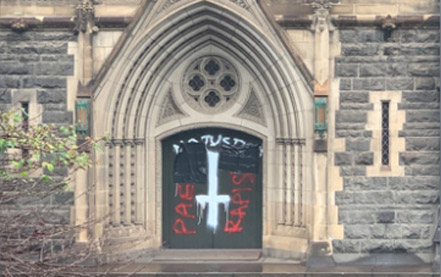
Я вспомнила о том эпизоде в Толедо, когда я увидела фотографию (см. ниже) граффити с сатанинским символом, перевернутым вверх ногами Kрестом, на двери католического собора в Мельбурне – того самого собора, в котором кардинал Пелл, согласно обвинению, подверг сексуальному насилию двух мальчиков-хористов. Граффити появилось после того, как Пелл был отпущен на свободу, а обвинения отменены; оно говорит “no justice”, “нет справедливости”.


Я увидела это граффити и совсем не почувствовала себя оскорбленной. Более того, я произнесла “да, так оно и есть” –  а затем внезапно вспомнила свое собственное “граффити”, кукольное представление, который я сделала после того, как я сама прошла через эмоциональное насилие или абьюз в Римско-Католической Церкви.

Friday, 10 April 2020

Streaming Christ


The graffiti

Years ago, during my trip to Spain made as a pilgrimage to St John of the Cross I was looking for the place where St John was imprisoned by his fellow monks. “Fellow” means that the monks belonged to the same Order of Carmel; the guilt of St John was that he, together with St Teresa of Avila, was pushing the reform of the Order, trying to clear it ­from various indulgent practices acquired during its spread in Europe (the Order of Carmel originated in the East; the first hermits lived on Mount Carmel thus the name). St John had spent about nine months being locked in a space just a little bigger than a tomb; every Friday he was pulled out and severely whipped by the monks. Eventually, when he was quite close to perishing, he managed to escape.

St John of the Cross is very important for me; he was the first Roman Catholic mystic I discovered and his writings helped me immensely to relate to the personal Christ, intimate Christ or Jesus Christ the Person. This is why I made a point of tracking the places of St John in Spain and was very glad to find an obscure plate that marked nothing, an empty place (now part of a children’s playground) stating that from there St John of the Cross successfully left his prison, semi-naked because of his habit rotted away but with the sublime love poetry which he composed while sitting in his tomb-like confinement. I remember that I even tried to recite his poem on that spot, out of excitement of being there; I walked down a huge staircase in high spirits when I suddenly saw the Satanic symbol, the Devil painted on a sandy colour step. Obviously, I was disgusted and enraged; “they pollute everything they can” I thought. It was quite clear to me that “they” understood the significance of St John of the Cross and of his poetry that is all about being in love with Christ, the Beloved of the soul. Even if “they” were unable to understand the nature of that love, “they” definitely understood that St John was witnessing the palpable reality of the relationship with Christ.

The episode in Toledo came to my mind when I saw the photo (below) of the graffiti with a Satanic symbol, upside down cross, on the doors of the Melbourne Roman Catholic Cathedral where Cardinal Pell allegedly molested two quire boys. The graffiti appeared after Pell was released and that particular charge dropped; it says “no justice”.


I saw it and was not even slightly offended. Furthermore, I said “yes, it is true” – and then I suddenly recalled my own “graffiti”, the play with figurines that I constructed after I have experienced the emotional abuse in the Roman Catholic Church.

Saturday, 28 December 2019

Трансформация


Трансформация

Его нет. Он настолько поглощен другими, что его просто нет – он распылен. Он отдал другим свою целостность = свою душу. Ему нужны все эти другие, чтобы собрать себя воедино, чтобы он смог вспомнить, кем именно, по его убеждению, он является. Он живет для них и посредством их; когда он активно делает это для кого-то, в душе его нет места для других, включая его самого.
“Он сам” является здесь самым важным. Он отвергает себя для того, чтобы спасти других от зла. Он зaбывает об отдыхе и еде. Ночью, в одиночестве, он молится Богу Отцу, прося Его дать ему сил и стойкости для продолжения своей миссии. На рассвете он возвращается, громко стуча в запертую от него на засов дверь, требуя, чтобы его впустили, движимый страхом прибыть слишком поздно для предотвращения несчастья. Eго прогоняют, но он настаивает, неостановимый в своем желании спасти любой ценой, даже ценой подавления воли другого.
Его любовь абсолютно безусловна, т.е. более совершенна, чем любовь Христа. У него нет цели творить волю Бога Отца, призывая к покаянию как условию для прощения грехов. Его любовь не требует от другого изменений, она требует только быть принятой и использованной ими; грехи прощаются немедленно, даже без просьбы о прощении, сразу же как только другой соглашается впустить его к себе. В отличие от Любви Бога, имеющей Личность Христа “прикрепленной” к этой Любви (если ты  желаешь Любви Бога – капитулируй перед Христом или даже лучше, Христос является воплощением Любви Бога, которая включает в себя многообразные вещи, в том числе суд) его любовь не имеет его самого, его “я”, “прикрепленного” к ней. Он более совершенен, чем Христос; он готов отдать свою любовь без себя.
Он жаждет действовать от имени других. Он делает для них всю их работу по изменению самих себя; все, что от них требуется – еле заметный кивок, призание его усилий. Он доставляет их туда, где, как он считает, они должны находиться, оставляет их там, а затем вступает в их роль в окружении, где может понадобиться его присутствие. Он счастлив играть роль заместителя –  заместителя мужа, заместителя отца и т.д. – все эти вице-роли ощущаются им как гораздо более настоящие, чем его реальные, (собственные роли). Он до такой степени “врос” в вице-роли, что с некоторого времени они приобрели для него гораздо большую реальность, чем его реальные роли, так что он уже не в состоянии различить, что является реальным, и тем более помнить реалии собственной жизни. В любом случае, “моя собственная жизнь” звучит слишком эгоистично и потому она нереальна.
Как Христос, с удовольствием дарующий душе (старающейся избавиться от грехов ради того, чтобы быть с Ним) Свою благодать, которая постепенно делает ее подобной Ему, спаситель тоже получает удовольствие от изменений, которые он вызывает в объекте своей спасательской деятельности. Не как Христос, однако, он умудряется делать это без желания другого измениться или быть с ним из неэгоистичных соображений. Это происходит гораздо менее эгоистично; он принимает другого таким, какой он есть и это навсегда, никаких изменений не требуется. Не как Христос, он в состоянии быть с теми, кто отдал себя злу без того, чтобы бросить им вызов. Даже если вначале он страдает, с прошествием времени ему становится легче. Он видит все меньше зла в другом человеке, называет это “улучшением” и приписывает его себе. Зло находится в процессе уничтожения – без покаяния и без тяжелой работы спасенных –  спаситель делает всю работу за них.
Со временем, однако, не только он живет в спасенных им других, но и эти другие тоже, будучи поглощенными пространством его собственной души (всеобъемлющей и всеприемлющей и вообще без границ), начинают жить в нем – но не как целые личности, а как фрагменты личностей, альтер-личности, здесь и там – куски жестокости, зла, отчаяния, темноты – те самые вещи, от которыx спаситель пытался их спасти. Теперь они живут в нем, сoкрытые внутри его личности. Он берет на себя ад других и дает ему новую жизнь под укрытием, неведомую даже ему самому.
--------------------------------------

Гротескное описание выше было моей последней попыткой разгадать загадку “исключительно хорошего альтруистичного человека”, называемого в книгах по клинической психологии “компульсивный (т.е. навязчивый, маниакальный) спасатель или спаситель”. Подобные люди обычно доходят до крайности, помогая другим, часто тратя на это все свое время; как правило, они словно бы не могут сказать “нет”, ответить отказом на явную или неявную просьбу помочь – или же, в некоторых случаях, просьба и вовсе отсутствует, но спаситель не в состоянии преодлеть свою навязчивую идею спасти.

Friday, 13 December 2019

The transformation


The transformation

He does not exist. He is so absorbed by the others that he does not exist, being dispersed. He gave his very wholeness = his soul away. He needs them all to make him whole and to recall who he is who he thinks. He lives for them and through them; when he is actively doing this for someone, he has no room for anyone else, himself included.
“Himself” is the most important here. He denies himself to rescue those who succumbed to the evil. He forgets about food or rest. At night he prays to God the Father asking Him for strength and endurance to carry on his own mission. At dawn he is back, knocking at the bolted from him door, demanding to be let in, moved by the fear to be too late to prevent the disaster. He is told to go away but he insists, unstoppable in his desire to save no matter what the price is, even if it is the price of crushing the other’s will.
His love is totally unconditional i.e. more perfect than Christ’s. He has no agenda of doing the will of God the Father, calling for repentance as the ground for the forgiveness of sins. His love does not demand change, it only demands to be taken and used; the sins are forgiven instantly without even asking as soon as another agrees to take him in. Unlike the Love of God that has the Person of Christ attached to that Love (you want the Love of God then surrender to Christ – or better to say Christ is the embodiment of God’s Love that incudes other things, like judgement) his love does not have himself [his Self] attached to it. He is more perfect than Christ; he is prepared to give his love without himself.
He is eager to act on implicit behalf of the other. He does all the work on their change for them; all they have to do is to slightly nod to his efforts. He delivers them where he thinks they must be, leaves them there and then take their role in the environment that may need their presence. He is happy to play a vice role – a vice husband, a vice father etc – those vice roles feel much truer to him than his real (own) roles. He has grown into vice roles so much that at some point they became more real than the real ones so he can no longer distinguish what is real, leave alone to remember the reality of his own life – and in any way “my own life” sound too selfish and this is why it is unreal.
As Christ, who delights in imparting to a soul (who is striving to get rid of own sins to be able to be with Him) His grace that is changing the soul into His likeness, the saviour also delights in the changes he causes in the object of his rescue activity. Unlike Christ though he manages to do this without another wanting to change or to selflessly be with him. It happens in a much less selfish way; he accepts another as he is and this is forever, no change is needed. Unlike Christ, he can be with those who gave themselves to evil without challenging them. Even if initially it causes suffering it becomes easier with time. He sees less and less evil in another person, calls it “improvement” and credits himself for it. The evil is in a process of being abolished – without repentance and without the hard work of the one saved – the saviour does all their work for them.
With passing time not just he lives through the rescuing of others but also those others, being absorbed into the space of his own soul (all-embracing and all-accommodating and without boundaries anyway) begin living through him and in him – not as whole persons though but as the pieces of persons, alter-persons, here and there – pieces of cruelty, malice, despair, emptiness – those very things the rescuer has tried to save them from. They are now living in him, being hidden within his person. He takes upon himself the hell of others and gives them a new life in disguise, unknown even to himself.
--------------------------------------

The grotesque description above was my final attempt to crack the enigma of “an extremely good and selfless person” called in clinical psychology books “a compulsive rescuer” or “a compulsive saviour”. Such people usually go to an unprecedented extreme to help others, often spending all their time doing that; typically, they seem to be unable to say “no” when they perceive an explicit or implicit request to help – or, in some cases, there is no request at all but the saviour cannot resist his compulsion to rescue.

Saturday, 7 December 2019

Monday, 25 November 2019

Tuesday, 12 November 2019