Showing posts with label psychology & God. Show all posts

Monday, 27 December 2021

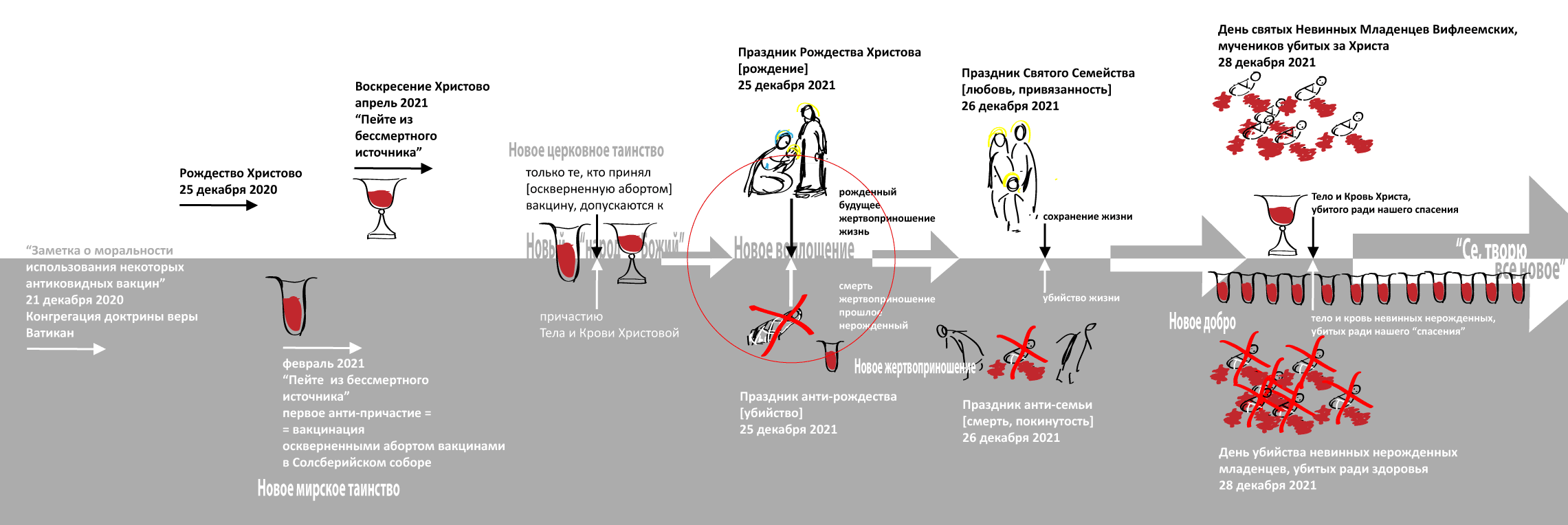
Се, творю все новое


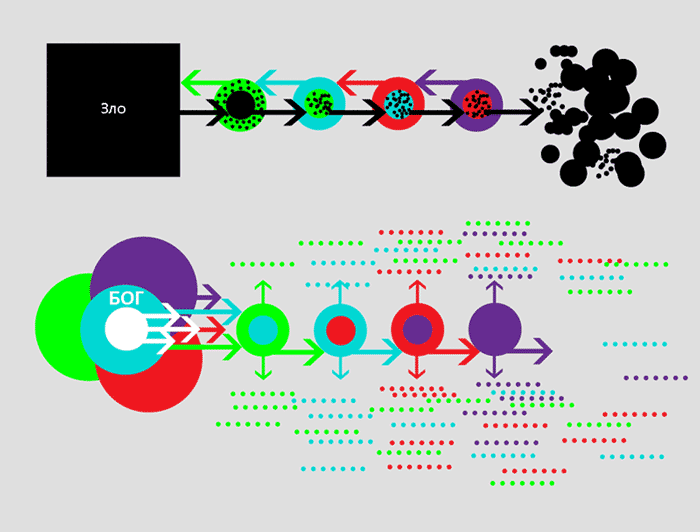
Комментарий к диаграмме

В феврале этого года я написала эссе Причастие оставленности о процессе трансформации вакцины в некое квази-причастие, в нечто, ставшее возможным только посредством запрета христианам доступа к настоящему причастию, Телу и Крови Христа. В нем я упомянула об одном особенно выдающемся случае раздачи вакцин, организованном в Солсберийском соборе. Мало того, что собор открыли специально и только для этого (после того, как много месяцев он простоял закрытым для верующих) – раздача вакцин происходила под аккомпанемент церковной музыки, включая евхаристические песнопения; таким образом, процесс вакцинации сделался исключительно торжественным и приобрел вкус участия в некоей мистерии.

С февраля 2021 процесс включения вакцин в жизнь Церкви сильно продвинулся. До этого некоторые церкви, отменяя богослужения с участием прихожан, всего лишь предоставляли свои здания для масс-вакцинации. Т.е., люди (любые люди – как христиане, так и не христиане) могли получить оскверненную абортом вакцину[1]в храме. В настоящее время, во многих местах некоторые епископы установили правило, согласно которому только принявшие вакцину могут участвовать в Литургии и принимать причастие и другие таинства Церкви. Обычно это делается под предлогом “вакцинируйся ради блага других, из христианской любви к ближнему”. Вылущенная из оболочки “благости”, суть призыва состоит в “прими оскверненную абортом вакцину для того, чтобы ты смог получить Тело и Кровь Христовы”.

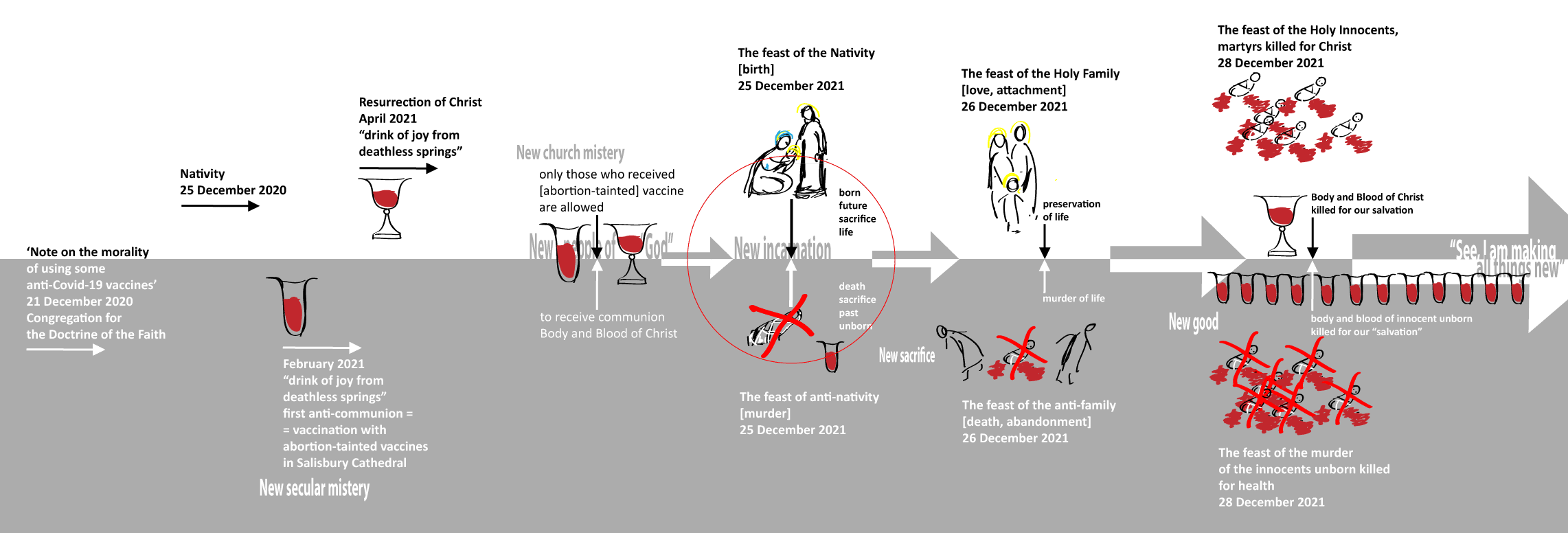
See, I am making all things new


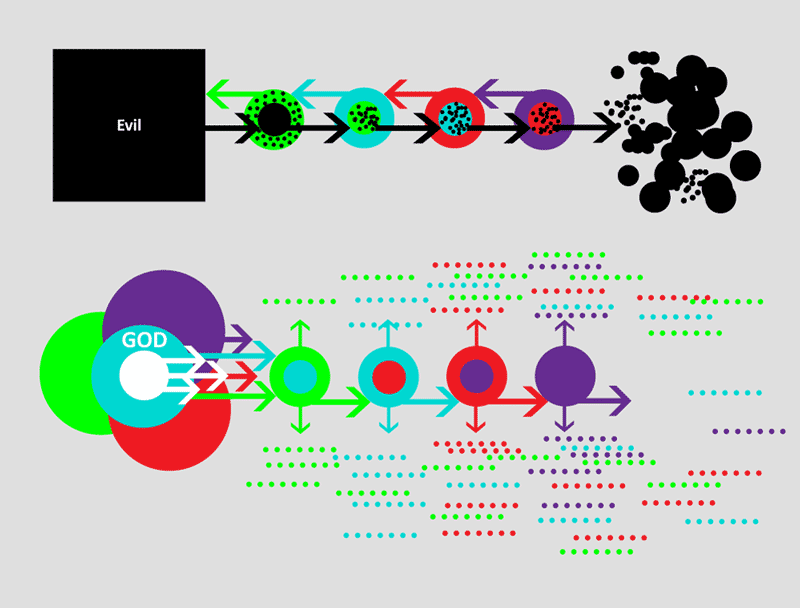
A brief comment to the diagram

On February this year I wrote the paper ‘A communion of abandonment’ about the process of transformation of a vaccine into a kind of communion, something that was only possible via baring Christians from access to the true communion of the Body and Blood of Christ. There I mentioned a particularly remarkable case of distribution of the vaccines, staged in the Salisbury Cathedral. Not only the Cathedral was opened for that purpose (after being closed to the faithful for months), the distribution of the vaccines was accompanied by liturgical music including Eucharistic hymns; the whole process thus was very solemn and acquires the ‘taste’ of participation in a mystery.

Since February 2021 the process of incorporating the vaccine into the life of the Church has much advanced. Before some churches, while suspending their public Masses, only volunteered their buildings for mass-vaccination. Meaning, that the people (any people, Christian and non-Christians) could receive the abortion-tainted vaccines in the church. Now, in many places, some bishops made it conditional for Christians to receive the vaccine first, to be able participate in the Liturgy and to receive the sacraments. It is usually done on the pretext of “vaccinate to be good to the brethren, out of Christian love”. Being stripped of niceties, the gist of the message is “receive the abortion-tainted vaccine so you could receive the Body and Blood of Christ”.

Friday, 21 May 2021

An iconographer must be shot first

This little paper is the result of being requested to write “a short piece that brings Christ alive for us [Westerners] in the icon”. I deliberately quoted the exact words because they provide “a springboard” into what icon is, what is not and what to do with it.

I cannot fulfill the request “to bring Christ alive for someone”. Objectively speaking, Christ does not need to be brought alive because He is alive, He is the Life itself. “Come and drink all of you who are thirsty, from the Source of immortality”. Yet, subjectively/paradoxically Christ is dead for all who do not wish to relate to Him. Hence, I am unable to make Him alive for anyone (including on an icon) no matter how eloquently I speak of Him or of the mystics who loved Him or of how “lively” I paint Him. Ultimately, it is between Christ and the soul. Jesus Christ becomes alive for someone in the moment when someone turns to Him in response, as a person to the Person (very much like to another human being). This is what the icon is for – being a representation of the Person (of Jesus Christ or His Mother or a Saint) it invites a response from the other. And an icon is an invitation to the most intense personal relationship imaginable, the witness of what Christianity is all about. I have not read about that elsewhere but I feel that an icon is the essence of what personhood is, the essence which is possible to depict using symbolic realism (an icon is both realistic and symbolic).


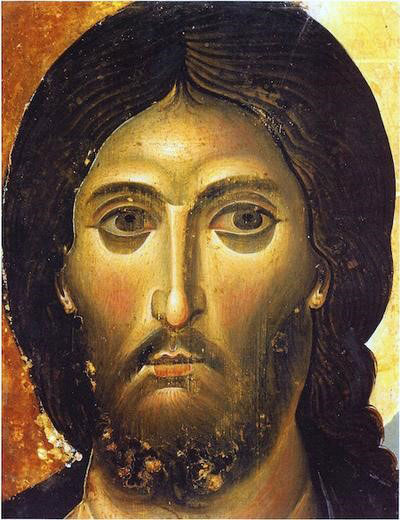
Christ Pantocrator, icon, Saint Catherine's Monastery, Sinai, 13 c.

Wednesday, 10 February 2021

Причастие оставленности


Символ веры

Верую в Бога, Отца Всемогущего, Творца неба и земли.
И в Иисуса Христа, Единственного Его Сына, Господа нашего, Который был зачат Святым Духом, рождён Девой Марией, страдал при Понтии Пилате, был распят, умер и погребён, сошёл в ад, в третий день воскрес из мёртвых, восшёл на небеса и восседает одесную Бога Отца Всемогущего, оттуда придёт судить живых и мёртвых.
Верую в Святого Духа, Святую Вселенскую Церковь, общение святых, прощение грехов, воскресение тела, жизнь вечную. Аминь.

Это – Апостольский Символ веры. Многие на Западе предпочитают его Никео-Цареградскому, считая последний слишком “техническим” (слово “единосущный”, по-английски звучащее как “consubstantial”, вызывает особенно много нареканий). Никео-Цареградский Символ веры не только более насыщен богословием, он более психологичен или лучше сказать, он выявляет некую психологическую реальность, а также возможность иной реальности, которую я увидела только в контексте развертывающейся сейчас компании по всемирной вакцинации. А именно, Никео-Цареградский Символ веры делает совершенно яcным, что Христос не был убит против Своей воли:

И во еди́наго Го́спода Иису́са Христа́, Сы́на Бо́жия, Единоро́днаго, И́же от Отца́ рожде́ннаго пре́жде всех век; Све́та от Све́та, Бо́га и́стинна от Бога и́стинна, рожде́на, несотворе́на, единосу́щна Отцу́, И́мже вся бы́ша.
Нас ра́ди челове́к и на́шего ра́ди спасе́ния сше́дшаго с небе́с и воплоти́вшагося от Ду́ха Свя́та и Мари́и Де́вы, и вочелове́чшася.
Распя́таго же за ны при Понти́йстем Пила́те, и страда́вша и погребе́на.

И воскре́сшаго в тре́тий день по Писа́нием.

(И во единого Господа Иисуса Христа, Сына Божия, единородного, рождённого от Отца прежде всех веков, Света от Света, Бога истинного от Бога истинного, рождённого, не сотворённого, одного существа со Отцом, через Которого всё сотворено;
для нас людей и для нашего спасения сошедшего с небес, принявшего плоть от Духа Святого и Марии Девы и сделавшегося человеком,
распятого за нас при Понтии Пилате, страдавшего и погребённого,
воскресшего в третий день согласно с Писаниями (пророческими),)

Уточнение “распятого за нас при Понтии Пилате” указывает на то, что Он был взрослым человеком, а не младенцем, потому что младенцев не раcпинали – но это побочная, довольно-таки абсурдная мысль, которая никогда бы не пришла мне в голову вне контеста истории с коронавирусом. Только в этом контексте у меня возникла мысль, что, в отличие от Никео-Цареградского Символа веры, ничто в Апостольком Символе веры не указывает на то, что жертвоприношение Христа было совершено по Его свободному произволению:

“И в Иисуса Христа, Единственного Его Сына, Господа нашего, Который был зачат Святым Духом, рождён Девой Марией, страдал при Понтии Пилате, был распят, умер и погребён, сошёл в ад, в третий день воскрес из мёртвых.”

Учитывая, что самая суть христианской веры опирается на три главнейших факта: воплощение, cмерть и воскресение Иисуса Христа, полностью Бога и полностью Человека, Он легко мог бы умереть младенцем, так сказать, поставив галочки против всех эти пунктов. Христос был зачат, рожден, убит и затем воскрес/стал бессмертным. Или даже короче: зачем Ему ждать, чтобы умереть – Он мог бы родиться и умереть сразу же. Или еще лучше – Он мог бы быть абортирован (это дало бы крупный бонус, в этом случае Он бы избежал даже мимолетного соприкосновения с тяготами земной жизни), рассечен, препарирован и позже распространен среди верующих в Него, в качестве причастия. Мы бы ничего не потеряли.

Церковь учит, что в воплощении, cмерти и воскресении Иисуса Христа, полностью Бога и полностью Человека, человеческая природа как таковая и каждый человек (посредством личного выбора принять этот факт в акте веры) была привита к Богу и получила исцеление; Христос, родившись от женщины, умерев и воскреснув “протащил” нашу человеческую природу сквозь смерть, делая воскресение и бессмертие возможным для каждого из нас. Опять-таки, похоже, что наше спасение могло бы быть достигнуто, если бы Христос был убит в младенчестве или даже абортирован. Он все равно бы обладал человеческой и божественной природой (теми же субстанциями или свойствами), которые бы дали Ему возможность выполнить Свою задачу, а нам – принять Его в причастии, “источнике бессмертия” и быть спасенными.

Sunday, 7 February 2021

Communion of abandonment


The Creed

I believe in God, the Father Almighty, Creator of Heaven and earth; and in Jesus Christ, His only Son Our Lord, Who was conceived by the Holy Spirit, born of the Virgin Mary, suffered under Pontius Pilate, was crucified, died, and was buried.
He descended into Hell; the third day He rose again from the dead; He ascended into Heaven, and
is seated at the right hand of God, the Father almighty; from thence He shall come to judge the living and the dead.
I believe in the Holy Spirit, the holy Catholic Church, the communion of saints, the forgiveness of sins, the resurrection of the body and life everlasting.

This is the Apostolic Creed. Many in the West prefer it to the Nicaean considering the latter to be “too technical” (consubstantial is being complained most about somehow). The Nicaean Creed is not only more theological, it is also more psychological or better to say it highlights the psychological reality and the possibility of another reality which became apparent to me only in the context of the current world vaccination campaign. Namely, the Nicaean Creed states very clearly that Christ was not killed against His will:

I believe in one Lord Jesus Christ,
the only-begotten Son of God,
born of the Father before all ages,
God from God, Light from Light,
true God from true God,
begotten, not made,
consubstantial with the Father.
Through him all things were made.
For us and for our salvation
he came down from heaven: by the power of the Holy Spirit
was incarnate of the Virgin Mary,
and became man.
For our sake he was crucified under Pontius Pilate;
he suffered death and was buried,
and rose again on the third day
in accordance with the Scriptures.

Meaning, it was clearly Christ’s own will, not just His Father’s will “to come down from heaven and to become man” and to sacrifice Himself “for our sake”. One can also read “and became man” as “he was incarnate and grew up”; the clarification “he was crucified under Pontius Pilate” also indicates him being a grown man and not a baby because babies were not crucified – but this is a side thought and quite an absurd one, a thought that could never come to my mind before, outside of the context of the current story with the coronavirus. Only in that context did it occur to me that, unlike the Nicaean Creed, nothing in the Apostolic Creed indicates that Christ’s sacrifice was done by his free will:

and in Jesus Christ, His only Son Our Lord, Who was conceived by the Holy Spirit, born of the Virgin Mary, suffered under Pontius Pilate, was crucified, died, and was buried. and rose again on the third day in accordance with the Scriptures.

Considering that Christian faith in its bare essence rests on three major facts: Incarnation, Death and Resurrection of Christ, true God and true Man (i.e. fully human as well as fully divine) then just as well He could die as a baby to tick those facts so to speak. Christ was conceived, born, murdered and then resurrected/became immortal. Or we can make it even shorter: why should He wait to die – He could just be born and killed on the spot. Or even better – He could be aborted (there would be a big bonus, He would not suffer even a glimpse of an earthly life), dissected, prepared and later on distributed to all believers in Him as a communion. We would not lose anything at all.

The Church teaches that via the Incarnation, Death and Resurrection of Christ, true God and true Man, the humanity as such and each human (via an individual choice to accepts this fact in an act of faith) got grafted into God and was healed; Christ, via being born of a woman, dying and being resurrected had pulled our human nature through death making the resurrection and immortality possible for each of us. Again, it appears that our salvation could be achieved if Christ was murdered as a baby or even was aborted. He would still have the same human and divine nature (the same substances or qualities) which should enable Him to perform His task and us – to receive Him in communion, “the source of immortality”, and be saved.

Saturday, 28 December 2019

Трансформация


Трансформация

Его нет. Он настолько поглощен другими, что его просто нет – он распылен. Он отдал другим свою целостность = свою душу. Ему нужны все эти другие, чтобы собрать себя воедино, чтобы он смог вспомнить, кем именно, по его убеждению, он является. Он живет для них и посредством их; когда он активно делает это для кого-то, в душе его нет места для других, включая его самого.
“Он сам” является здесь самым важным. Он отвергает себя для того, чтобы спасти других от зла. Он зaбывает об отдыхе и еде. Ночью, в одиночестве, он молится Богу Отцу, прося Его дать ему сил и стойкости для продолжения своей миссии. На рассвете он возвращается, громко стуча в запертую от него на засов дверь, требуя, чтобы его впустили, движимый страхом прибыть слишком поздно для предотвращения несчастья. Eго прогоняют, но он настаивает, неостановимый в своем желании спасти любой ценой, даже ценой подавления воли другого.
Его любовь абсолютно безусловна, т.е. более совершенна, чем любовь Христа. У него нет цели творить волю Бога Отца, призывая к покаянию как условию для прощения грехов. Его любовь не требует от другого изменений, она требует только быть принятой и использованной ими; грехи прощаются немедленно, даже без просьбы о прощении, сразу же как только другой соглашается впустить его к себе. В отличие от Любви Бога, имеющей Личность Христа “прикрепленной” к этой Любви (если ты  желаешь Любви Бога – капитулируй перед Христом или даже лучше, Христос является воплощением Любви Бога, которая включает в себя многообразные вещи, в том числе суд) его любовь не имеет его самого, его “я”, “прикрепленного” к ней. Он более совершенен, чем Христос; он готов отдать свою любовь без себя.
Он жаждет действовать от имени других. Он делает для них всю их работу по изменению самих себя; все, что от них требуется – еле заметный кивок, призание его усилий. Он доставляет их туда, где, как он считает, они должны находиться, оставляет их там, а затем вступает в их роль в окружении, где может понадобиться его присутствие. Он счастлив играть роль заместителя –  заместителя мужа, заместителя отца и т.д. – все эти вице-роли ощущаются им как гораздо более настоящие, чем его реальные, (собственные роли). Он до такой степени “врос” в вице-роли, что с некоторого времени они приобрели для него гораздо большую реальность, чем его реальные роли, так что он уже не в состоянии различить, что является реальным, и тем более помнить реалии собственной жизни. В любом случае, “моя собственная жизнь” звучит слишком эгоистично и потому она нереальна.
Как Христос, с удовольствием дарующий душе (старающейся избавиться от грехов ради того, чтобы быть с Ним) Свою благодать, которая постепенно делает ее подобной Ему, спаситель тоже получает удовольствие от изменений, которые он вызывает в объекте своей спасательской деятельности. Не как Христос, однако, он умудряется делать это без желания другого измениться или быть с ним из неэгоистичных соображений. Это происходит гораздо менее эгоистично; он принимает другого таким, какой он есть и это навсегда, никаких изменений не требуется. Не как Христос, он в состоянии быть с теми, кто отдал себя злу без того, чтобы бросить им вызов. Даже если вначале он страдает, с прошествием времени ему становится легче. Он видит все меньше зла в другом человеке, называет это “улучшением” и приписывает его себе. Зло находится в процессе уничтожения – без покаяния и без тяжелой работы спасенных –  спаситель делает всю работу за них.
Со временем, однако, не только он живет в спасенных им других, но и эти другие тоже, будучи поглощенными пространством его собственной души (всеобъемлющей и всеприемлющей и вообще без границ), начинают жить в нем – но не как целые личности, а как фрагменты личностей, альтер-личности, здесь и там – куски жестокости, зла, отчаяния, темноты – те самые вещи, от которыx спаситель пытался их спасти. Теперь они живут в нем, сoкрытые внутри его личности. Он берет на себя ад других и дает ему новую жизнь под укрытием, неведомую даже ему самому.
--------------------------------------

Гротескное описание выше было моей последней попыткой разгадать загадку “исключительно хорошего альтруистичного человека”, называемого в книгах по клинической психологии “компульсивный (т.е. навязчивый, маниакальный) спасатель или спаситель”. Подобные люди обычно доходят до крайности, помогая другим, часто тратя на это все свое время; как правило, они словно бы не могут сказать “нет”, ответить отказом на явную или неявную просьбу помочь – или же, в некоторых случаях, просьба и вовсе отсутствует, но спаситель не в состоянии преодлеть свою навязчивую идею спасти.

Friday, 13 December 2019

The transformation


The transformation

He does not exist. He is so absorbed by the others that he does not exist, being dispersed. He gave his very wholeness = his soul away. He needs them all to make him whole and to recall who he is who he thinks. He lives for them and through them; when he is actively doing this for someone, he has no room for anyone else, himself included.
“Himself” is the most important here. He denies himself to rescue those who succumbed to the evil. He forgets about food or rest. At night he prays to God the Father asking Him for strength and endurance to carry on his own mission. At dawn he is back, knocking at the bolted from him door, demanding to be let in, moved by the fear to be too late to prevent the disaster. He is told to go away but he insists, unstoppable in his desire to save no matter what the price is, even if it is the price of crushing the other’s will.
His love is totally unconditional i.e. more perfect than Christ’s. He has no agenda of doing the will of God the Father, calling for repentance as the ground for the forgiveness of sins. His love does not demand change, it only demands to be taken and used; the sins are forgiven instantly without even asking as soon as another agrees to take him in. Unlike the Love of God that has the Person of Christ attached to that Love (you want the Love of God then surrender to Christ – or better to say Christ is the embodiment of God’s Love that incudes other things, like judgement) his love does not have himself [his Self] attached to it. He is more perfect than Christ; he is prepared to give his love without himself.
He is eager to act on implicit behalf of the other. He does all the work on their change for them; all they have to do is to slightly nod to his efforts. He delivers them where he thinks they must be, leaves them there and then take their role in the environment that may need their presence. He is happy to play a vice role – a vice husband, a vice father etc – those vice roles feel much truer to him than his real (own) roles. He has grown into vice roles so much that at some point they became more real than the real ones so he can no longer distinguish what is real, leave alone to remember the reality of his own life – and in any way “my own life” sound too selfish and this is why it is unreal.
As Christ, who delights in imparting to a soul (who is striving to get rid of own sins to be able to be with Him) His grace that is changing the soul into His likeness, the saviour also delights in the changes he causes in the object of his rescue activity. Unlike Christ though he manages to do this without another wanting to change or to selflessly be with him. It happens in a much less selfish way; he accepts another as he is and this is forever, no change is needed. Unlike Christ, he can be with those who gave themselves to evil without challenging them. Even if initially it causes suffering it becomes easier with time. He sees less and less evil in another person, calls it “improvement” and credits himself for it. The evil is in a process of being abolished – without repentance and without the hard work of the one saved – the saviour does all their work for them.
With passing time not just he lives through the rescuing of others but also those others, being absorbed into the space of his own soul (all-embracing and all-accommodating and without boundaries anyway) begin living through him and in him – not as whole persons though but as the pieces of persons, alter-persons, here and there – pieces of cruelty, malice, despair, emptiness – those very things the rescuer has tried to save them from. They are now living in him, being hidden within his person. He takes upon himself the hell of others and gives them a new life in disguise, unknown even to himself.
--------------------------------------

The grotesque description above was my final attempt to crack the enigma of “an extremely good and selfless person” called in clinical psychology books “a compulsive rescuer” or “a compulsive saviour”. Such people usually go to an unprecedented extreme to help others, often spending all their time doing that; typically, they seem to be unable to say “no” when they perceive an explicit or implicit request to help – or, in some cases, there is no request at all but the saviour cannot resist his compulsion to rescue.

Monday, 30 July 2018

The loop [the formula of spiritual abuse in the true, i.e. with valid sacraments, Church]


Several years ago I wrote in my paper ‘The curse of the choice’:

“I am convinced that many disorders have in their very beginning a double bind of the choice between good and evil, life and death presented by the closest attachment figure, mother or her viceroy.

The formula of the “original choice”: a quadruple bind

                        abusive mother

to stay = death                  to leave = death
-----------------------  child  -----------------------
to stay = life                       to leave = life

The upper line: To stay with an abusive mother means to die (it feels like it to a child; it is always the spiritual reality and sometimes the physical reality as well) but to leave her also means death for a child according to her primary instinct. It is the first double bind which forms the basis of the future persistent darkness in the life of an individual, along the line “there is no exit” out of any life situation which involves a relationship with other(s).

The bottom line:  To stay with an abusive mother means to live (the security that a child needs) but to leave her means also to live (this is the voice which grows stronger as a person grows older; a mother will defend herself against it via inducing shame and guilt into her child, crushing her personality and thus keeping her on a “baby level” psychologically). This is the second double bind which is “a fake light of hope” in the life of an individual, the “secure passivity” of never growing aided by the dreams of something better which are never realized.”

Further in that paper and in several others I explored the effect of the parental abuse on the relationships of a grown abused individual with God. I established that in the beginning of her relationship with Jesus Christ such a person inevitably relates to Him as if He was her abusive parent, reincarnating a parent in Christ, so to speak. Paradoxically, the perceived love of God triggers an automatic response, a fear of inescapable doom that is always attached to “the love” she knew before.
If a person perseveres, with time she will gain enough experience of being with Christ to realize that He is Love that cannot contain even the slightest trace of evil or darkness – therefore the quadruple bind in which she has existed for all her life begins dissolving. There is still a choice but now it is a choice between evil and good, between Satan and Christ – not between “good evil” and “evil good”, between “evil God” and “Divine evil”. The accumulating new experiences of Love untainted by the evil will eventually cause the psyche of a believer to make a hundred and eighty degree turn, from the vector of fear i.e. inwards (the habitual mode of relating to others formed by the quadruple bind) to the vector of trust, outwards.

I will note here briefly that it follows from the definition of God as light in Whom there is no darkness that anyone who wishes to be with Him must get rid of the darkness in their own soul. The less darkness there is in the believer the fuller is his union with Christ, the most desirable state for a Christian soul and the sole purpose of her life. Only a desire to be with Christ can enable a soul to endure her “undoing” by Him, from the evil that the abuse had incorporated in her very structure. Words are inadequate to convey what is at stake even if a very legitimate parallel with an attachment to a human person is employed because Jesus Christ, while being a perfect human, is immeasurably more i.e. He is God; His divinity raises this attachment and everything that is involved to the level of the absolute, life or death, all or nothing. It is all about the taste of the meaning of existence of a soul at last – justification, redemption, deification – in one word, it is living through, not just reading, the Gospel story, with Christ, the story being applied to me, the concrete me. It is the experiential knowledge of the truth of Christian revelation, something a believer gets to know in the biblical sense of this word, soul, spirit, and body.  

The objective reality which a believer discovers experientially: Jesus Christ, the Son of God, is Love and He cannot change. The believer then is always perfectly safe with Him; this safety is the foundation of her path to Him, something that initiated her restructuring. Christ is the Head of the Church and the Church is His Body, according to Christian teaching. A believer then, abused or not, has all rights to expect the Church of Christ to be the safest place for her or for him.

Unfortunately, it is not always so. I do not mean what is much talked about nowadays, the child sexual abuse within the Church, although its principles and effect in essence do not differ from what I am about to describe. I am interested here in a more subtle manifestation of the same phenomenon, namely a situation when a victim of narcissistic abuse in childhood later in life finds Christ, learns to trust Him, comes to His Church and then one day out of blue suddenly beholds her abusive mother being reincarnated in the Church, in the sight of a priest holding the Eucharistic Cup. I am very interested to understand what is there that makes an adult, a firm believer who knows the Love of Christ on her own experience, to feel as if she was thrown back into her abusive childhood and even further back, into hell devoid of any hope to escape – all those feelings I repeat reaching a pinnacle while she is watching a narcissist priest bring forward the Cup with Christ, her Beloved.

Monday, 11 June 2018

Vectors of the soul: a narcissistic church


"When ye therefore shall see the abomination of desolation,  spoken of by Daniel the prophet, standing in the holy place (whoso readeth, let him understand)"
(Matthew 24:15)


"In my paper 'Vectors and Structures' I explored how the abuse of a child, by a narcissistic parent (or other significant attachment figure) effects the relationship of an abused (grown) individual with God. This three-parts theatre investigates the mechanics of narcissistic abuse in the Church and its consequences for a soul."

Friday, 11 May 2018

Сердце Нового Завета

Любовь, данная опосредованно

“Вся вечность не так ценна, как тот день, в который “Песня Песней” была дана Израилю; все книги Писания святы, но Песня Песней – это Святая Святых” (Рабби Акива, 1-2 вв. н.э.)

Как это часто подчеркивается иудейскими и христианскими авторами, “Песня Песней” не похожа ни на одну книгу Ветхого Завета. Она не описывает извилистую историю человечества как “Бытие”. Она не провозглашает заповеди Бога, согласно которым Израиль должен жить, если он хочет оставаться избранным народом Божиим, как “Исход”. Она не выражает огромные боль и гнев Бога, Который вновь и вновь предается Своим народом, как книги пророков. Это правда, что некоторые пророки описывали взаимотношения Бога с Израилем в терминах брачной любви. В то время как эти термины были не просто метафорами, но указывали на метафизическую реальность, на природу любви Бога к человечеству (которая наиболее адекватно может быть описана в терминах супружеской любви), внимание пророков было сосредоточено на развертывании событий в конкретное время истории Израиля и в грядущие времена (приход Мессии). Аллюзии к божественному Супругу и неверной жене, даже блуднице, служили подобающим описанием поведения Израиля по отношению к Богу. Говоря о временах, совершенно очевидно, что книги пророков актуальны и в наше время и будут актуальны до конца времен, потому что они показывают человеческое отношение к Богу, которое, подобно идущей вниз спирали, повторяется в разные времена и так и будет повторяться – до тех пор, пока времени больше не будет. “Песня Песней”, как мне кажется, принадлежит к этой “нет-больше-времени” категории. Это есть сейчас и будет всегда, вне времени = без времени, как и любая встреча души с Богом, в любви; или двух людей в любви; или же, обобщенно говоря, двух личностей в любви.

“Песня Песней” – это олицетворение предельной кристалльной простоты. В ней нет абсолютно ничего, кроме любви двоих, непреодолимо влекомых друг к другу. Природа любви Бога к Израилю (иудаистическая интерпретация)/любовь Бога к человеческой душе и этой души – к Богу (христианская интерпретация) описана здесь на языке двух влюбленных, опьяненных взаимыми откликами. Бог открывает Себя самым простым из всех возможных методом;  его откровение о Самом Себе – это откровение о Своей сущности, Любви (Бог есть Любовь), любовно действующей на человеческую душу, которая в свою очередь, будучи созданной по образу и подобию Бога (Который есть Любовь), способна ответить Ему любовью, данной Им ей изначально. Я пытаюсь выразить, что самая сущность Бога, т.е. нечто, мысль о чем заставляет верущего содрогаться от осознания собственной малости, может быть описана посредством вполне человеческой любви-эроса, известной аблолютно всем. И не только описана, но и узнана на опыте.

Wednesday, 9 May 2018

The heart of the New Testament


Love referred

“For all of eternity in its entirety is not as worthy as the day on which Song of Songs was given to Israel, for all the Writings are holy, but Song of Songs is the Holy of Holies.” (Rabbi Akiva, 1-2 c. AD)

As it is often stated by both Jewish and Christian authors ‘Song of Songs’ is unlike any other book in the Old Testament. It does not relate the convoluted history of humanity like Genesis. It does not proclaim the rules which God wishes His people to follow if they want to remain His chosen possession like Exodus. It does not vent the enormous hurt and anger of God Who is betrayed by His people again and again like books of Prophets. It is true that several prophets described the relationship of God with Israel in spousal terms. While those terms were not a mere metaphor but hinted the metaphysical reality, the nature of love of God for humanity (which can be the most adequately described in terms of the spousal love), the focus of the prophets were the unfolding events in a particular time of history of Israel and in the future time (the coming of the Messiah). The references to the jealous divine Spouse and the unfaithful bride, even whore, where serving as an apt description of the Israel’s conduct towards God. Speaking about times, the prophet’s books are obviously relevant to our time and till the end of times because they convey the human attitude to God that, like a downfall spiral, repeats in times and will repeat itself until the time will be no more. ‘Song of Songs’, it seems to me, belongs to that “no more time” category. It is now and it will always be, out of time = timeless, as any encounter of a soul with God, in love. Or two humans in love. Or, to include both, it is two persons in love.

‘Song of Songs’ is the epitome of simplicity. There is absolutely nothing there but love between the two irresistibly drawn towards each other. The nature of love of God for Israel (Judaic interpretation)/love of God for a human soul and of this soul– for God (Christian interpretation) is described in the language of two lovers intoxicated by each other’s response. Meaning, God reveals himself in the simplest possible way here i.e. his self-revelation is about his own essence (God is Love) acting in love towards a human soul which is, being an image of God (Who is Love) is capable of answering Him with that love which He gave her in advance. What I am trying to say here is that the very essence of God i.e. something truly unthinkable, something the thought of which makes a believer tremble and shrink in realisation of own smallness, can be conveyed by the very human erotic love known to anyone. And not just conveyed but experienced as well.

Monday, 18 December 2017

Взаимные отражения [однополый "брак"]

Рождение

Данное эссе является следствием моей эмоциональной реакции на новость о только что принятом в Австралии “Законе об однополых браках”. Каким-то образом я умудрилась пропустить все предварительные дискуссии на эту тему. Разумеется, я слышала об этом феномене раньше, но никогда не соотносила услышанное с реальностью, моей реальностью; так, путешествия по Франции и Испании (странам, на тот момент уже узаконившим однополые “браки”), у меня ни разу не возникло ни одной мысли об этом. Кстати, именно это было неоднократно сказано об однополом “браке” – а именно, что он изменит реальность только для сексуальных меньшинств, но не для нормального большинства.

Wednesday, 13 December 2017

Mutual reflections [same sex "marriage"]

The birth

This paper has originated from my emotional response to learning about ‘The same sex marriage bill’ which has just been legislated in Australia. I somehow managed to miss all the preparatory talks about it. Naturally, I heard about the phenomenon before but somehow never put it in the context of reality, my reality; while traveling in France and Spain (which at that time had already endorsed same sex “marriage”) I gave no thought to it. That is exactly what is being said about same sex “marriage” by the way, that it would change only the reality of the sexual minorities and not of the straight majority.


Saturday, 10 June 2017

Антиприст

Не со-общающийся Христос

Верная передача значения английского слова “to relate” (“The non-relating Christ”), использованного в английском оригинале эссе, крайне важна для понимания всего текста. “Общаться” – слишком активное действие, “относиться” – слишком пассивное, и оба слова “не совсем то”, поэтому я остановилась на почти вышедшем из употребления значении слова “сообщающийся” в применении к людям, а не только к сосудам. Я нарочно пишу его как “со-общающийся”, чтобы подчеркнуть разницу, т.е. одушевленность действия.
Под выражением “со-общающийся Христос” подразумевается Христос, лично относящийся к верующему, Христос “на связи”, с Которым можно найти контакт, Который желает такого контакта, Который отвечает и обращается, одним словом, тот, с кем возможна взаимная связь/личные отношения в многообразных формах, знакомых верующим по опыту.
Проще дать аналогию: человек с нормальной психикой.

Представьте себе, как бы это выглядело. Христос воплотился бы, вырос и начал обходить крошечные городки Иудеи, чудесным образом исцеляя больных, изгоняя бесов, говоря толпам, что “блаженны нищие духом” и “подставьте другую щеку”. Он бы делал все это “в общем”, как некто с миссией донести определенные слова до слушателей. Об бы делал все, что описано в Евангелиях, но при этом никак не со-общаясь с людьми. Нет, Он не хранил  бы молчание, когда апостолы разбудили Его, испугавшись, что их лодку вот-вот перевернет бурей – Он бы просто произнес “волны, утихните” а затем, не добавив “почему вы так маловерны?”, обращенное к апостолам, вернулся бы к своему тюфяку.

Или же Он мог произнести эти слова, но очень безличностно, без какой-либо реальной эмоциональной связи со Своими учениками, сердце к сердцу. Можно ведь сказать “я люблю тебя” так, что тот, к кому эти слова обращены, почувствует, что его словно пронзили ножом, столь очевидна их ложь. Он мог бы также войти в Иерусалим предельно безличностно, без каких бы то ни было личных ремарк и, точно в такой же безличностной манере, мог бы быть распятым и умереть. Он мог бы молиться за тех, кто Его распял, но делать это пусто и безлично, просто потому, что Сын Человеческий должен сказать эти слова. Это вписывалось в Его учение. Xристанин должен молиться о своих врагах, вот Он и подал нам пример – может быть, он произнес эти слова именно по этой причине. Он мог бы сказать их про себя; в конце концов, Его Отец все равно бы Его услышал.

Sunday, 28 May 2017

The Antipriest

A non-relating Christ

Imagine what it would be. Christ became incarnated, grew up, walked around tiny towns of Judea, miraculously healing the sick, vanquishing evil spirits, telling the crowds that “blessed are the poor” and “turn the other chick”. He would do this in a very general way, as someone who has a mission, the words to deliver to the general audience. He would do what was described in the Gospels but would do that without relating to others. No, He would not be silent when the apostles woke Him up when they thought their boat was sinking – He would simply say “waves, be quiet” and then, without adding “why do you have such little faith?” to the apostles return back to his cushion.

Actually, He could still say those words but in a very impersonal way, without truly connecting with his disciples, heart to heart. One can say “I love you” in a way that another feels being stabbed, so obvious is the lie. He could also enter Jerusalem without making personal points and, in the same non-relating way, become crucified and die. He could, as well, pray for those who crucified Him but do this in an empty way, just because the Son of God must say those words. It is fitting His previous teaching. A Christian must pray for the enemies, and He also must give us an example – perhaps He uttered those words just for that reason. He could say them silently; after all, the Father still would hear Him.

The striking thing about the Gospels is that they do not say, as the novels do, anything about how the people there look, or about their intonation etc. but they are all somehow very alive and very visible. They are visible and come to a life via the response of Christ to them. An impersonal “woman with an issue of blood” who touched the hem of His cloth in a hope of a cure becomes, via His response to her, very clearly visible to us in His words “go daughter, your faith saved you”.

Noteworthy, Christ in that episode (as it is related in the Gospel of Mark) seems to need to see the one who touched Him and this is why He asks who did it and continues to insist despite the very reasonable statement of the apostles that He is in the middle of a crowd and everyone presses Him so how can they – and He – know. Obviously, since He had no trouble seeing Nathaniel under the fig tree before Nathaniel was called, by Philip, to come to see Him [and even before Nathaniel was born] He did not need to physically see the one who touched Him. It appears that He wants a woman who hid herself in the crowd to come out for the sole purpose of relating to each other in person, via the act of seeing each other. By that very act of His we see that woman now as she is under the magnifying glass. She literally pops up from the pages of the Gospels. It is quite astonishing because no “literary methods” of description etc. is employed like the description of the woman’s face, how she looked at Christ etc. She is alive to us because He saw her soul, “your faith saved you”. She knows she was seen = her soul was seen by Him and she feels fully alive, and we feel it as well.

Wednesday, 25 January 2017

Векторы и структуры


Симбиоз: вектор насилия

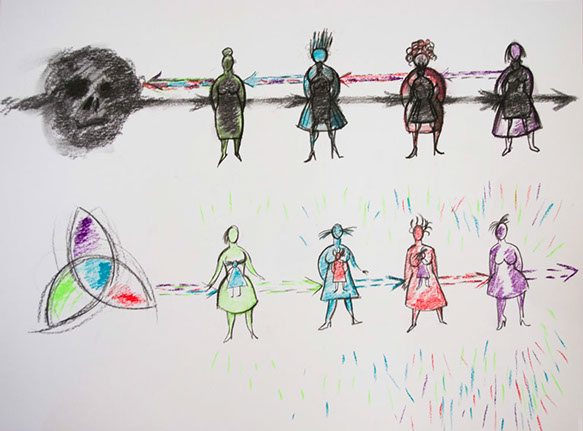
Зло (демон), в верхней линии фигур, вошло в линию поколений через жестокое обращение с детьми и теперь использует его для самовоспроизведения. Перекореженная модель отношений "мать - дочь" повторяется в разнообразных формах, характеризующихся так наз. "enmeshment" (т.е., размыванием/отсутствием личных границ, отсутствием автономного развития личности), наиболее тяжелым вариантом которого является "эмоциональный инцест" - мать делает из дочери собственного родителя/эрзац-супруга. Мать таким образом компенсирует недостаток любви собственной матери, превращая свою дочь в мать. В результате, дочь теперь"вечнобеременна" собственной матерью, которая "растет" внутри нее, выталкивая из центра "Я" дочери. Обратите внимание на векторы: вектор демонической энергии беспрепятственно устремляется вперед, в то время как векторы жизни (жизненной энергии) каждой женщины направлены назад, к собственной матери. Образно говоря, каждая женщина "питается будущим", т.е. ее жизнь происходит из еще нерожденных детей.


Нормальное положение вещей: каждая мать во второй линии фигур беременна собственной дочерью, которая, в свою очередь, продолжает линию поколений. Вектор жизни каждой, находясь в гармонии с вектором Бога, направлен вперед. Меньшие векторы расходятся во всех направлениях, обозначая развитие и плодотворность их жизней не только в сфере продолжения рода; фактически, им нет нужды "воспроизводиться ради выживания", как в верхней линии. Женщины черпают свою силу в Боге и в собственных матерях.

Monday, 23 January 2017

Vectors and structures [an investigation of the vectors of childhood abuse in relation to God]


Symbiosis: the vectors of abuse

The evil, in the upper line of figures, entered into a line of generations  via child abuse and now uses it to reproduce itself. The twisted relationship “mother – daughter” keeps repeating itself via various forms of abuse that involve enmeshment, the extreme case of which is emotional incest i.e. a mother makes her daughter into own parent/surrogate spouse. A mother compensates for the lack of her mother’s love by making her daughter into her own mother. A daughter now is eternally “pregnant” with own mother which is “growing” inside her, pushing the daughter’s core = her Self aside from a centre. Note the vectors, of the evil going onwards unobstructed, and of each woman’s life, directed backwards towards own mother. Metaphorically speaking, each woman is “sucking the future” i.e. she derives her life from the children to come.


The normal order of things: each mother in the second line of figures is pregnant with her own daughter who in turns continues the family line. The vector of life for each, being in harmony with the vector of God, is directed forwards. Smaller vectors are expanding in all directions indicating the expansion of their life not just to a procreative realm but into the world; in fact here there is no need to “procreate for survival” as in the line above. The persons derive their strengths from God and their own mothers.

Thursday, 27 October 2016

The Mass of TOB

My previous paper on the current Theology of Body (TOB) movement (hereafter referred to as West-TOB, after the name of its leading ideologist), ‘A pure gaze of lust’, was the outcome of my attempts to understand why my encounter with it was so destructive to my prayer life and especially to my relationship [or attachment?] with Jesus Christ. I rationalized in the end of that paper that the major reason for this was the West-TOB’s profanation of the most sacred, of the love of God for a human soul, via muddling the sacred with what they call “bold talk about sex”:

I have been into Carmelite spirituality for some time now, with St John of the Cross being my spiritual guide. Until I heard and read “the TO” my mind was free from the obscene associations discussed above. It means that when I read the lines of St John of the Cross from his ‘Spiritual Canticle: Songs between the soul and the Bridegroom’:
“In the inner wine cellar
I drank of my Beloved, and, when I went abroad through all this valley, I no longer knew anything, and lost the herd that I was following.” 

Tuesday, 13 September 2016

A pure gaze of lust (some thoughts re: TOB and Christopher West, a letter to a friend)

Dear ***,

Thank you for lending us the recommended by Fr *** books ‘Theology of the Body Made Simple’ by Anthony Percy and ‘Theology of the Body for Beginners’ by Christopher West. I was somewhat surprised with the content of those four public lectures which were announced, as you know, as “Pope John Paul II’s Theology of the Body”. I have sampled the lectures of Pope JP II in the past; I cannot say I was wildly interested in the topic but nevertheless interested enough to attend the local lectures about TOB, probably out of my habit to attend just anything in our parish that promises some theology, especially if it is something new to me.

The local lectures, while they clarified nothing about the complex ideas of the Pope (as I recalled them), seemed to also introduce something else that I found to be sufficiently at odds with what I remembered from my cursory reading of the ‘The Redemption of the Body and the Sacramentality of Marriage’, the title of the of Pope JP II’s Wednesday Catecheses. Hence I dived into Pope John Paul II’s work again.

Almost everyone comments that his text is extremely difficult to get through. My difficulties with it are that the topic is very wast and the ideas are very many; it is exceedingly difficult to keep them all in mind while moving through the dense text which is his separate lectures presented in chronological order. Some say there are many contradictions in the text as well; I pinned a few. There is nothing surprising about that though, considering that Pope JP II had given his lectures over six years; it is only natural that his thoughts would develop over that time, sometimes abruptly I suspect. At least this is my impression. Hence his talks appear to be anything but the smooth monolith the modern TOB presents.

I think I am almost instinctively drawing the line here, between the ‘The Redemption of the Body and the Sacramentality of Marriage’ and the current TOB movement, via stressing the original title and the character of Pope JP II’s lectures because the character of what is now circulating in the Catholic Church makes it hard to see it as the organic continuation of the Pope’s teaching (please note that when I say “TOB” I always mean the current TOB movement). While Pope John Paul II indeed spoke much about the human body he would always speak of it in the context of the human person. This is, I believe, the #1 important difference between Pope JP II’s thought and the thoughts of the developers of the Theology of the Body (hence referred to as TOB) who tend to consider the body as a separate entity. The body in their take, being separated from the soul, becomes somewhat impersonal. Consequentially, a human being can now be considered as an animal whose bodily functions, sexual in particular, can be observed, studied, and discussed without the slightest consideration of the dignity of his person. Hence comes the #2 important difference between Pope JP II and the TOB-developers, namely that the former, while discussing human sexuality, does it far more broadly, laconically and immeasurably more modestly than the latter.

Hence, in my mind, there is a definite shift of the foci, proportions and vectors which one can clearly observe when comparing the teaching of Pope JP II and the TOB being put side by side. At the same time, the TOB seems to faithfully retain what they call “the ground-breaking approach” of Pope JP II, four original experiences of the human being, Original Solitude, Original Unity, Original Nakedness and Original Sin and following from them the realisations that the human body is symbolic, nuptial, free and fallen. It instructive though what the TOB does with it:

“John Paul II is taking us back to our proper roots. It is only from a proper foundation that you can build anything of worth. To go back to “the beginning” – to Original Solitude, Unity and Nakedness – means to understand that only by opening ourselves up to God, his creation and other human beings can we mature.”[1]

I am quite sure that, even while Pope JP II maintained the utmost importance of the understanding of these “original experiences” for his teaching about marriage, he would not put it in the way that TOB does, i.e. creating an impression that we must somehow run back to Eden – he is a far better theologian than this. The quote above creates a very strong vector “from the New Testament to the Old”, “from the New Adam to the Old”, “from being born in Christ – back to before the Incarnation”. This is just an example of how the handling of the Pope’s work can change its meaning via blowing up some of its parts and reducing other, distorting the proportions.

Before I move on to the discussion of what actually propelled me to write this letter I must say that I have numerous disagreements with the thesis of Pope John Paul II. My major disagreement is that I do not see any need in creating some additional “logical concepts” (like “the original experiences”) for backing up the Church’s teaching about marriage (as it was delivered by ‘Humane Vitae’ by the Pope Paul VI), for a very simple reason: the concept of the Christian marriage (as distinct from human marriage) is a product of revelation hence the former cannot be justified by the latter. Nothing in the created order can explain revelation without reducing that very revelation and without making it trivial. Rather the meaning of creation is itself revealed through the action of the Holy Spirit.


Monday, 6 June 2016

Tails of the snake: some thoughts on the mechanics of centering prayer

St Ignatius Loyola, in his discourses on discernment, addresses the difficult problem of the evil force meddling with the grace of God, via introducing something evil into the immediate aftermath of the experience of the divine (or of the inspiration, or of anything good, coming from God), the evil seed which subtly diverts a person from God, that is a very sophisticated kind of a desolation. He makes two important points:

1 – However well the evil tried to imitate God’s action in the soul he cannot do this perfectly; something inevitably will “stick out” and can be identified;

2 – When one realises that he is experiencing such a kind of desolation it is very useful to track the train of the events (thoughts, actions) back and find the oddity, the insertion of the evil which he calls the “tail of a snake”. It is also useful to tell someone else about what happened.

The “tail of a snake” in my experience usually manifests itself as something felt as “being not exactly right”, not exactly in the right place, something alien to the whole situation, absurd. It is impossible of course to make “the list of oddities” (or even their constellations) and watch out for them; what in one situation is normal in another is outrageous; how something is said or done often matters more than the words and actions themselves. An example: the statement “I do not have a personal relationship with Jesus” is perfectly OK in case of an unbeliever (in fact it is a bit odd because a non-believer is not expected to have such a relationship) and in the case of a Christian – but a practising Christian most likely would say those words with regret, knowing that it is desirable and even necessary to have one. The same words sound entirely different coming from the mouth of a member of a Christian contemplative Order the charism of which is to strive after the most intimate union (that is, the pinnacle of personal relationship) with Jesus Christ. And, if a person says those words indifferently and adds that it is all fine, for him and for others, to be Christian and contemplative and to ignore Christ at the same time it is an example of oddity, the “tail of the snake” of Loyola.

This “something”, especially if it is “too subtle” or “too odd to believe”, the intellect tends to explain rationally.  In the example above, of a “contemplative”, a listener may be oppressed by the very absurdity of his words or may think he does not understand something, perhaps a contemplative means something else – and, the higher the authority of the contemplative the more likely is a listener to rationalize his words and not to raise their voice in protest. Besides, the words “contemplative” or “contemplative order” tend to induce, in many, a sense of awe; they hint at a spiritual elitism and a promise to share it with the listener – of course as long as the listener does not argue with the statements of the contemplative.

This rationalistic approach often does not explain anything but, by the very familiarity of the act of explanation (any explanation, in this case pseudo-explanation which works as a dummy) to the psyche helps one to dismiss and eventually to forget the oddities. Later, when a person finds himself in a state of desolation, he recalls them and they begin making sense – providing, that he will manage to establish the connection between the two. One does not necessarily have to actively walk a Christian path to know this experientially. The process described above is present in human relationships as well. An example: the stories of the victims of rape who, looking back, are cursing themselves for their dismissal of the warning signs and gut feelings that “something was very wrong”.