Saturday, 28 December 2019

Трансформация


Трансформация

Его нет. Он настолько поглощен другими, что его просто нет – он распылен. Он отдал другим свою целостность = свою душу. Ему нужны все эти другие, чтобы собрать себя воедино, чтобы он смог вспомнить, кем именно, по его убеждению, он является. Он живет для них и посредством их; когда он активно делает это для кого-то, в душе его нет места для других, включая его самого.
“Он сам” является здесь самым важным. Он отвергает себя для того, чтобы спасти других от зла. Он зaбывает об отдыхе и еде. Ночью, в одиночестве, он молится Богу Отцу, прося Его дать ему сил и стойкости для продолжения своей миссии. На рассвете он возвращается, громко стуча в запертую от него на засов дверь, требуя, чтобы его впустили, движимый страхом прибыть слишком поздно для предотвращения несчастья. Eго прогоняют, но он настаивает, неостановимый в своем желании спасти любой ценой, даже ценой подавления воли другого.
Его любовь абсолютно безусловна, т.е. более совершенна, чем любовь Христа. У него нет цели творить волю Бога Отца, призывая к покаянию как условию для прощения грехов. Его любовь не требует от другого изменений, она требует только быть принятой и использованной ими; грехи прощаются немедленно, даже без просьбы о прощении, сразу же как только другой соглашается впустить его к себе. В отличие от Любви Бога, имеющей Личность Христа “прикрепленной” к этой Любви (если ты  желаешь Любви Бога – капитулируй перед Христом или даже лучше, Христос является воплощением Любви Бога, которая включает в себя многообразные вещи, в том числе суд) его любовь не имеет его самого, его “я”, “прикрепленного” к ней. Он более совершенен, чем Христос; он готов отдать свою любовь без себя.
Он жаждет действовать от имени других. Он делает для них всю их работу по изменению самих себя; все, что от них требуется – еле заметный кивок, призание его усилий. Он доставляет их туда, где, как он считает, они должны находиться, оставляет их там, а затем вступает в их роль в окружении, где может понадобиться его присутствие. Он счастлив играть роль заместителя –  заместителя мужа, заместителя отца и т.д. – все эти вице-роли ощущаются им как гораздо более настоящие, чем его реальные, (собственные роли). Он до такой степени “врос” в вице-роли, что с некоторого времени они приобрели для него гораздо большую реальность, чем его реальные роли, так что он уже не в состоянии различить, что является реальным, и тем более помнить реалии собственной жизни. В любом случае, “моя собственная жизнь” звучит слишком эгоистично и потому она нереальна.
Как Христос, с удовольствием дарующий душе (старающейся избавиться от грехов ради того, чтобы быть с Ним) Свою благодать, которая постепенно делает ее подобной Ему, спаситель тоже получает удовольствие от изменений, которые он вызывает в объекте своей спасательской деятельности. Не как Христос, однако, он умудряется делать это без желания другого измениться или быть с ним из неэгоистичных соображений. Это происходит гораздо менее эгоистично; он принимает другого таким, какой он есть и это навсегда, никаких изменений не требуется. Не как Христос, он в состоянии быть с теми, кто отдал себя злу без того, чтобы бросить им вызов. Даже если вначале он страдает, с прошествием времени ему становится легче. Он видит все меньше зла в другом человеке, называет это “улучшением” и приписывает его себе. Зло находится в процессе уничтожения – без покаяния и без тяжелой работы спасенных –  спаситель делает всю работу за них.
Со временем, однако, не только он живет в спасенных им других, но и эти другие тоже, будучи поглощенными пространством его собственной души (всеобъемлющей и всеприемлющей и вообще без границ), начинают жить в нем – но не как целые личности, а как фрагменты личностей, альтер-личности, здесь и там – куски жестокости, зла, отчаяния, темноты – те самые вещи, от которыx спаситель пытался их спасти. Теперь они живут в нем, сoкрытые внутри его личности. Он берет на себя ад других и дает ему новую жизнь под укрытием, неведомую даже ему самому.
--------------------------------------

Гротескное описание выше было моей последней попыткой разгадать загадку “исключительно хорошего альтруистичного человека”, называемого в книгах по клинической психологии “компульсивный (т.е. навязчивый, маниакальный) спасатель или спаситель”. Подобные люди обычно доходят до крайности, помогая другим, часто тратя на это все свое время; как правило, они словно бы не могут сказать “нет”, ответить отказом на явную или неявную просьбу помочь – или же, в некоторых случаях, просьба и вовсе отсутствует, но спаситель не в состоянии преодлеть свою навязчивую идею спасти.

Friday, 13 December 2019

The transformation


The transformation

He does not exist. He is so absorbed by the others that he does not exist, being dispersed. He gave his very wholeness = his soul away. He needs them all to make him whole and to recall who he is who he thinks. He lives for them and through them; when he is actively doing this for someone, he has no room for anyone else, himself included.
“Himself” is the most important here. He denies himself to rescue those who succumbed to the evil. He forgets about food or rest. At night he prays to God the Father asking Him for strength and endurance to carry on his own mission. At dawn he is back, knocking at the bolted from him door, demanding to be let in, moved by the fear to be too late to prevent the disaster. He is told to go away but he insists, unstoppable in his desire to save no matter what the price is, even if it is the price of crushing the other’s will.
His love is totally unconditional i.e. more perfect than Christ’s. He has no agenda of doing the will of God the Father, calling for repentance as the ground for the forgiveness of sins. His love does not demand change, it only demands to be taken and used; the sins are forgiven instantly without even asking as soon as another agrees to take him in. Unlike the Love of God that has the Person of Christ attached to that Love (you want the Love of God then surrender to Christ – or better to say Christ is the embodiment of God’s Love that incudes other things, like judgement) his love does not have himself [his Self] attached to it. He is more perfect than Christ; he is prepared to give his love without himself.
He is eager to act on implicit behalf of the other. He does all the work on their change for them; all they have to do is to slightly nod to his efforts. He delivers them where he thinks they must be, leaves them there and then take their role in the environment that may need their presence. He is happy to play a vice role – a vice husband, a vice father etc – those vice roles feel much truer to him than his real (own) roles. He has grown into vice roles so much that at some point they became more real than the real ones so he can no longer distinguish what is real, leave alone to remember the reality of his own life – and in any way “my own life” sound too selfish and this is why it is unreal.
As Christ, who delights in imparting to a soul (who is striving to get rid of own sins to be able to be with Him) His grace that is changing the soul into His likeness, the saviour also delights in the changes he causes in the object of his rescue activity. Unlike Christ though he manages to do this without another wanting to change or to selflessly be with him. It happens in a much less selfish way; he accepts another as he is and this is forever, no change is needed. Unlike Christ, he can be with those who gave themselves to evil without challenging them. Even if initially it causes suffering it becomes easier with time. He sees less and less evil in another person, calls it “improvement” and credits himself for it. The evil is in a process of being abolished – without repentance and without the hard work of the one saved – the saviour does all their work for them.
With passing time not just he lives through the rescuing of others but also those others, being absorbed into the space of his own soul (all-embracing and all-accommodating and without boundaries anyway) begin living through him and in him – not as whole persons though but as the pieces of persons, alter-persons, here and there – pieces of cruelty, malice, despair, emptiness – those very things the rescuer has tried to save them from. They are now living in him, being hidden within his person. He takes upon himself the hell of others and gives them a new life in disguise, unknown even to himself.
--------------------------------------

The grotesque description above was my final attempt to crack the enigma of “an extremely good and selfless person” called in clinical psychology books “a compulsive rescuer” or “a compulsive saviour”. Such people usually go to an unprecedented extreme to help others, often spending all their time doing that; typically, they seem to be unable to say “no” when they perceive an explicit or implicit request to help – or, in some cases, there is no request at all but the saviour cannot resist his compulsion to rescue.

Saturday, 7 December 2019

Monday, 25 November 2019

Tuesday, 12 November 2019

Monday, 12 August 2019

Thursday, 6 June 2019

Lacunae


This is a brief follow up of my papers which explored the phenomenon of a covert narcissist priest.

There I argued that a narcissist priest (who during the Mass is supposed to be an icon of Jesus Christ), in the reality the antipode of Christ, subverts and eventually erases the presence of Christ in the minds of his congregation and swaps it with his own, overbearing and entirely self-centered, presence [‘The Antipriest’, ‘The heart of the New Testament’].

The only remaining “intact” form of the presence of Christ in the church now is the Real Presence, in the Eucharistic species, the Body and Blood of Christ [‘Vectors of the soul’].

I also argued that the mechanics of abuse in a narcissistic church (the ecclesial gathering which enables narcissistic abuse by the clergy and those close to them) are identical with abuse done by a narcissistic mother, now being “upgraded” from the temporal realm to the realm of the absolute (God’s church) – hence the deadly impact of abuse in the church for those who already were abused in childhood [‘The loop: a formula of the spiritual abuse in the true i.e. with valid sacraments, Church’]. I concluded that it was Jesus Christ in the Holy Communion, His objective Real Presence (something that the believer cannot obtain outside of the Church) that keeps the believer being imprisoned in the narcissistic church. Christ thus seems to play the role of bait or even an enabler of the abuse, and this impossible image, of Life and Love used by Evil and Death,  crushes the believer’s mind.

Some things are better grasped via a picture than via a logical argument. A believer knows perfectly well that Jesus Christ the Redeemer and Liberator cannot be used by evil or collaborate with it and yet he feels it when he is presented with the sight of the abuser distributing that very Christ. What he sees and experiences now in the narcissistic church overwrites what he knows.
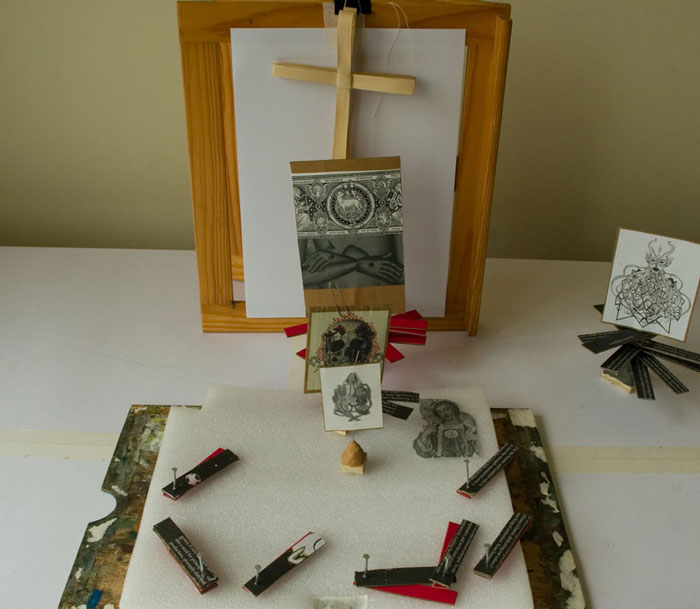
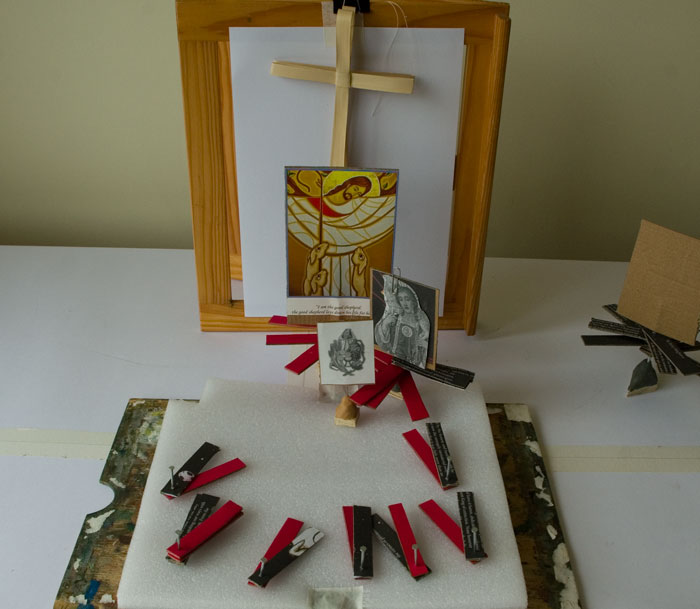
I tried, via making visual representations of the situation, to grasp the role of Our Lord in the narcissistic church and to solve the impossible dilemma of a believer “staying with Christ and having no life” or “leaving Christ and having a life”.

* * *     
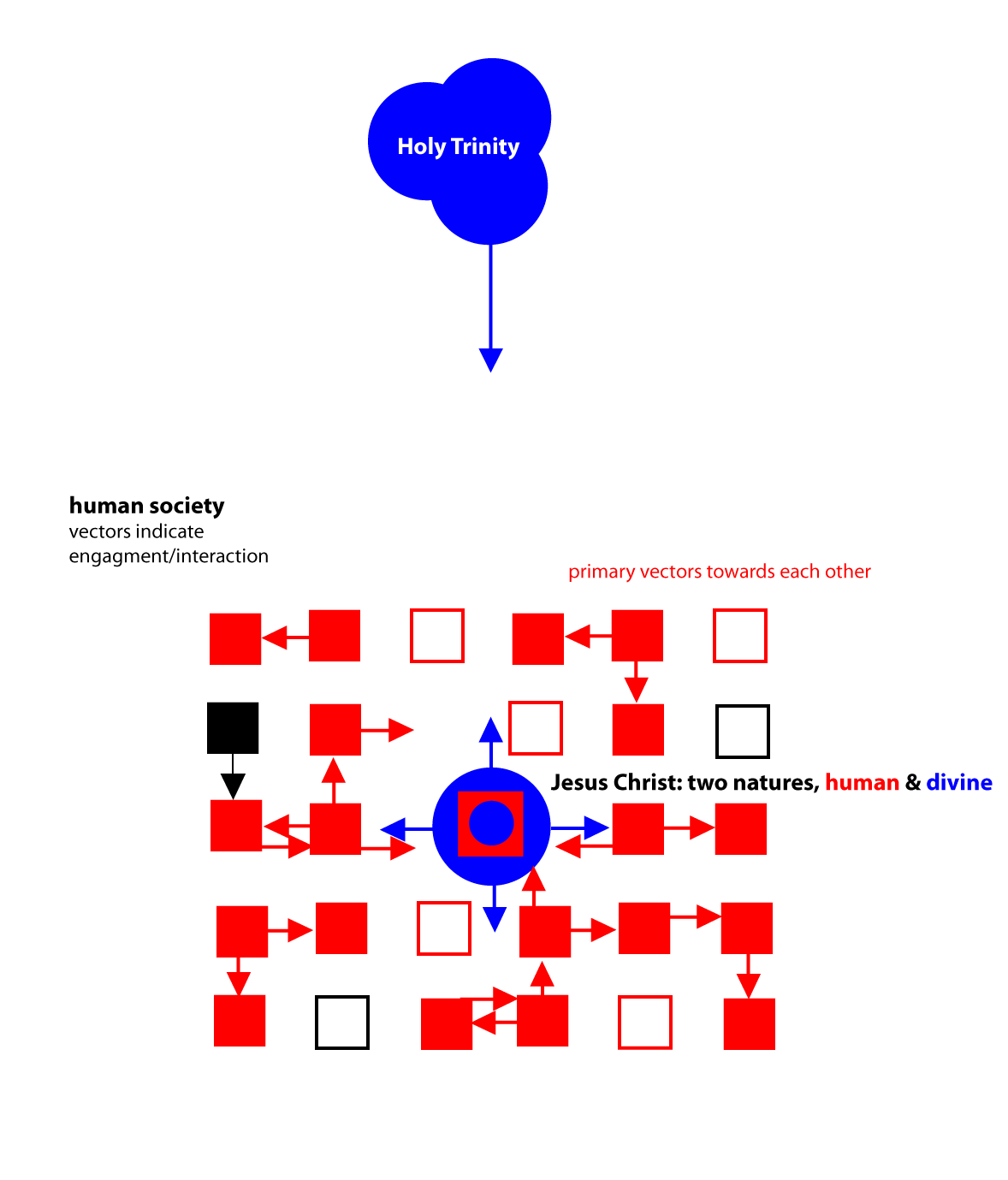
A typical human society consists of individuals with [relatively] normal psyche – i.e. capable of empathy and genuine engagement with the others (red squares). Any society always has some individuals with pathologies who for some reason are unable to empathize or to relate to others in a genuine way (black squares). Obviously, the more devoid of empathy/pathological individuals that are present, the less healthy is the society.

Pic 1. The earthly ministry of Jesus Christ


The above is what Jesus Christ had to deal with while walking in Galilee and preaching. His words and He Himself could be accepted or rejected by the others but he was never ignored, “not seen” or “walled off by silence” (this is something that happened to Him much later, close to Golgotha). 

Monday, 20 May 2019

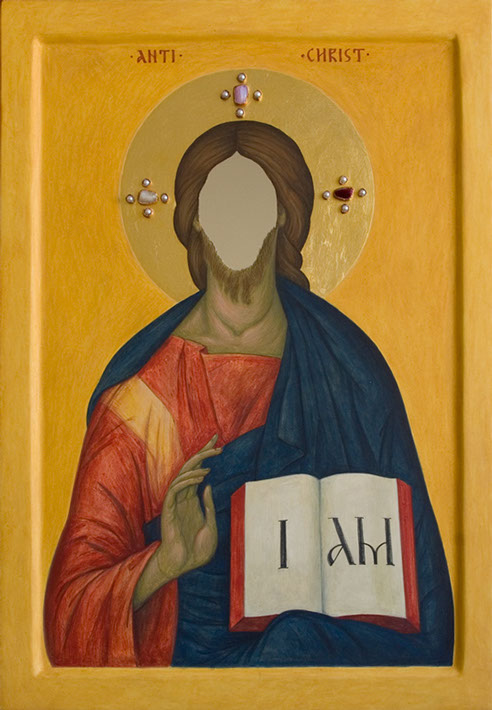
Antichrist

Antichrist 
2019, mixed media on board (egg tempera, gold leaf, acrylic mirror),
58,5 x 41 cm

Saturday, 4 May 2019

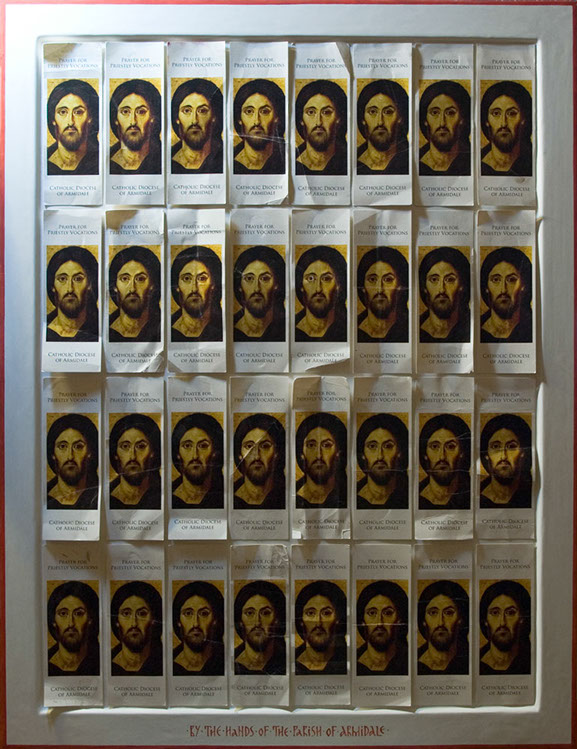
By the Hands of the Parish of Armidale


2019, prayer cards & egg tempera on board, 97 x 74 cm

This work makes use of the prayer cards distributed in the Roman Catholic Cathedral of Armidale, NSW for the purpose of praying for priestly vocations.om Sinai, the earliest (6th c.) and arguably the most famous icon of Jesus Christ.

The damaged prayer cards have been collected from the pews and used as they were found. No additional damage has been done.

“By the hand of…” is a customary expression used by an iconographer when they sign their work (on the reverse side of an icon). It highlights the fact that it is not she who made an icon but the Holy Spirit, she = her hand = was only the tool.

Thursday, 13 December 2018

Wednesday, 14 November 2018

All Carmelite Saints

Lord,
may the patronage
of the Blessed Virgin Mary, our Mother,
and the prayers of all the saints of Carmel
help us to walk steadfastly in their footsteps,
and by our prayers and good works
to further the cause of your Church.
We ask this through Christ our Lord.

Monday, 30 July 2018

The loop [the formula of spiritual abuse in the true, i.e. with valid sacraments, Church]


Several years ago I wrote in my paper ‘The curse of the choice’:

“I am convinced that many disorders have in their very beginning a double bind of the choice between good and evil, life and death presented by the closest attachment figure, mother or her viceroy.

The formula of the “original choice”: a quadruple bind

                        abusive mother

to stay = death                  to leave = death
-----------------------  child  -----------------------
to stay = life                       to leave = life

The upper line: To stay with an abusive mother means to die (it feels like it to a child; it is always the spiritual reality and sometimes the physical reality as well) but to leave her also means death for a child according to her primary instinct. It is the first double bind which forms the basis of the future persistent darkness in the life of an individual, along the line “there is no exit” out of any life situation which involves a relationship with other(s).

The bottom line:  To stay with an abusive mother means to live (the security that a child needs) but to leave her means also to live (this is the voice which grows stronger as a person grows older; a mother will defend herself against it via inducing shame and guilt into her child, crushing her personality and thus keeping her on a “baby level” psychologically). This is the second double bind which is “a fake light of hope” in the life of an individual, the “secure passivity” of never growing aided by the dreams of something better which are never realized.”

Further in that paper and in several others I explored the effect of the parental abuse on the relationships of a grown abused individual with God. I established that in the beginning of her relationship with Jesus Christ such a person inevitably relates to Him as if He was her abusive parent, reincarnating a parent in Christ, so to speak. Paradoxically, the perceived love of God triggers an automatic response, a fear of inescapable doom that is always attached to “the love” she knew before.
If a person perseveres, with time she will gain enough experience of being with Christ to realize that He is Love that cannot contain even the slightest trace of evil or darkness – therefore the quadruple bind in which she has existed for all her life begins dissolving. There is still a choice but now it is a choice between evil and good, between Satan and Christ – not between “good evil” and “evil good”, between “evil God” and “Divine evil”. The accumulating new experiences of Love untainted by the evil will eventually cause the psyche of a believer to make a hundred and eighty degree turn, from the vector of fear i.e. inwards (the habitual mode of relating to others formed by the quadruple bind) to the vector of trust, outwards.

I will note here briefly that it follows from the definition of God as light in Whom there is no darkness that anyone who wishes to be with Him must get rid of the darkness in their own soul. The less darkness there is in the believer the fuller is his union with Christ, the most desirable state for a Christian soul and the sole purpose of her life. Only a desire to be with Christ can enable a soul to endure her “undoing” by Him, from the evil that the abuse had incorporated in her very structure. Words are inadequate to convey what is at stake even if a very legitimate parallel with an attachment to a human person is employed because Jesus Christ, while being a perfect human, is immeasurably more i.e. He is God; His divinity raises this attachment and everything that is involved to the level of the absolute, life or death, all or nothing. It is all about the taste of the meaning of existence of a soul at last – justification, redemption, deification – in one word, it is living through, not just reading, the Gospel story, with Christ, the story being applied to me, the concrete me. It is the experiential knowledge of the truth of Christian revelation, something a believer gets to know in the biblical sense of this word, soul, spirit, and body.  

The objective reality which a believer discovers experientially: Jesus Christ, the Son of God, is Love and He cannot change. The believer then is always perfectly safe with Him; this safety is the foundation of her path to Him, something that initiated her restructuring. Christ is the Head of the Church and the Church is His Body, according to Christian teaching. A believer then, abused or not, has all rights to expect the Church of Christ to be the safest place for her or for him.

Unfortunately, it is not always so. I do not mean what is much talked about nowadays, the child sexual abuse within the Church, although its principles and effect in essence do not differ from what I am about to describe. I am interested here in a more subtle manifestation of the same phenomenon, namely a situation when a victim of narcissistic abuse in childhood later in life finds Christ, learns to trust Him, comes to His Church and then one day out of blue suddenly beholds her abusive mother being reincarnated in the Church, in the sight of a priest holding the Eucharistic Cup. I am very interested to understand what is there that makes an adult, a firm believer who knows the Love of Christ on her own experience, to feel as if she was thrown back into her abusive childhood and even further back, into hell devoid of any hope to escape – all those feelings I repeat reaching a pinnacle while she is watching a narcissist priest bring forward the Cup with Christ, her Beloved.

Sunday, 8 July 2018

Monday, 11 June 2018

Vectors of the soul: a narcissistic church


"When ye therefore shall see the abomination of desolation,  spoken of by Daniel the prophet, standing in the holy place (whoso readeth, let him understand)"
(Matthew 24:15)


"In my paper 'Vectors and Structures' I explored how the abuse of a child, by a narcissistic parent (or other significant attachment figure) effects the relationship of an abused (grown) individual with God. This three-parts theatre investigates the mechanics of narcissistic abuse in the Church and its consequences for a soul."

Thursday, 24 May 2018

Icons are for prayer

“I am not asking you to do anything more than to look at Him” 
St Teresa of Avila ‘The Way of Perfection’


The purpose and function of an icon

It is quite common to hear that icons are “windows into heavens”. Unfortunately, this poetic metaphor has a flavour of distantly gazing, through a window, into the immeasurably far away heavens – where God is surrounded by his angels and his saints. The icon, on this take, has something to do with “beautiful enigmatic art” along with notions like “artefact”, “museum”, even “esoteric” and so on. There could be no more contrary approach to the meaning of the icon than this one.

While icon painting unites both fine art and the wealth of theology (namely Christological and Trinitarian dogmas) the first true icons (that is, not symbolic representations like lamb or fish) were born out of the simple need of a human heart, to look at the portraits of those they love. The portrait-like depictions of Jesus Christ and Virgin Mary appeared first; the dogma of the Seventh Ecumenical Council about the veneration of the holy images was second. Likewise, the prayer of a believer before an icon of Christ, true God and true man, was first – it is only centuries later that icon painting was proclaimed to be the activity that reinforces the reality of Incarnation. The active engagement with the icon was first, the dogma which defends such engagement was second.

Friday, 11 May 2018

Сердце Нового Завета

Любовь, данная опосредованно

“Вся вечность не так ценна, как тот день, в который “Песня Песней” была дана Израилю; все книги Писания святы, но Песня Песней – это Святая Святых” (Рабби Акива, 1-2 вв. н.э.)

Как это часто подчеркивается иудейскими и христианскими авторами, “Песня Песней” не похожа ни на одну книгу Ветхого Завета. Она не описывает извилистую историю человечества как “Бытие”. Она не провозглашает заповеди Бога, согласно которым Израиль должен жить, если он хочет оставаться избранным народом Божиим, как “Исход”. Она не выражает огромные боль и гнев Бога, Который вновь и вновь предается Своим народом, как книги пророков. Это правда, что некоторые пророки описывали взаимотношения Бога с Израилем в терминах брачной любви. В то время как эти термины были не просто метафорами, но указывали на метафизическую реальность, на природу любви Бога к человечеству (которая наиболее адекватно может быть описана в терминах супружеской любви), внимание пророков было сосредоточено на развертывании событий в конкретное время истории Израиля и в грядущие времена (приход Мессии). Аллюзии к божественному Супругу и неверной жене, даже блуднице, служили подобающим описанием поведения Израиля по отношению к Богу. Говоря о временах, совершенно очевидно, что книги пророков актуальны и в наше время и будут актуальны до конца времен, потому что они показывают человеческое отношение к Богу, которое, подобно идущей вниз спирали, повторяется в разные времена и так и будет повторяться – до тех пор, пока времени больше не будет. “Песня Песней”, как мне кажется, принадлежит к этой “нет-больше-времени” категории. Это есть сейчас и будет всегда, вне времени = без времени, как и любая встреча души с Богом, в любви; или двух людей в любви; или же, обобщенно говоря, двух личностей в любви.

“Песня Песней” – это олицетворение предельной кристалльной простоты. В ней нет абсолютно ничего, кроме любви двоих, непреодолимо влекомых друг к другу. Природа любви Бога к Израилю (иудаистическая интерпретация)/любовь Бога к человеческой душе и этой души – к Богу (христианская интерпретация) описана здесь на языке двух влюбленных, опьяненных взаимыми откликами. Бог открывает Себя самым простым из всех возможных методом;  его откровение о Самом Себе – это откровение о Своей сущности, Любви (Бог есть Любовь), любовно действующей на человеческую душу, которая в свою очередь, будучи созданной по образу и подобию Бога (Который есть Любовь), способна ответить Ему любовью, данной Им ей изначально. Я пытаюсь выразить, что самая сущность Бога, т.е. нечто, мысль о чем заставляет верущего содрогаться от осознания собственной малости, может быть описана посредством вполне человеческой любви-эроса, известной аблолютно всем. И не только описана, но и узнана на опыте.

Wednesday, 9 May 2018

The heart of the New Testament


Love referred

“For all of eternity in its entirety is not as worthy as the day on which Song of Songs was given to Israel, for all the Writings are holy, but Song of Songs is the Holy of Holies.” (Rabbi Akiva, 1-2 c. AD)

As it is often stated by both Jewish and Christian authors ‘Song of Songs’ is unlike any other book in the Old Testament. It does not relate the convoluted history of humanity like Genesis. It does not proclaim the rules which God wishes His people to follow if they want to remain His chosen possession like Exodus. It does not vent the enormous hurt and anger of God Who is betrayed by His people again and again like books of Prophets. It is true that several prophets described the relationship of God with Israel in spousal terms. While those terms were not a mere metaphor but hinted the metaphysical reality, the nature of love of God for humanity (which can be the most adequately described in terms of the spousal love), the focus of the prophets were the unfolding events in a particular time of history of Israel and in the future time (the coming of the Messiah). The references to the jealous divine Spouse and the unfaithful bride, even whore, where serving as an apt description of the Israel’s conduct towards God. Speaking about times, the prophet’s books are obviously relevant to our time and till the end of times because they convey the human attitude to God that, like a downfall spiral, repeats in times and will repeat itself until the time will be no more. ‘Song of Songs’, it seems to me, belongs to that “no more time” category. It is now and it will always be, out of time = timeless, as any encounter of a soul with God, in love. Or two humans in love. Or, to include both, it is two persons in love.

‘Song of Songs’ is the epitome of simplicity. There is absolutely nothing there but love between the two irresistibly drawn towards each other. The nature of love of God for Israel (Judaic interpretation)/love of God for a human soul and of this soul– for God (Christian interpretation) is described in the language of two lovers intoxicated by each other’s response. Meaning, God reveals himself in the simplest possible way here i.e. his self-revelation is about his own essence (God is Love) acting in love towards a human soul which is, being an image of God (Who is Love) is capable of answering Him with that love which He gave her in advance. What I am trying to say here is that the very essence of God i.e. something truly unthinkable, something the thought of which makes a believer tremble and shrink in realisation of own smallness, can be conveyed by the very human erotic love known to anyone. And not just conveyed but experienced as well.

Wednesday, 18 April 2018