Monday, 11 June 2018

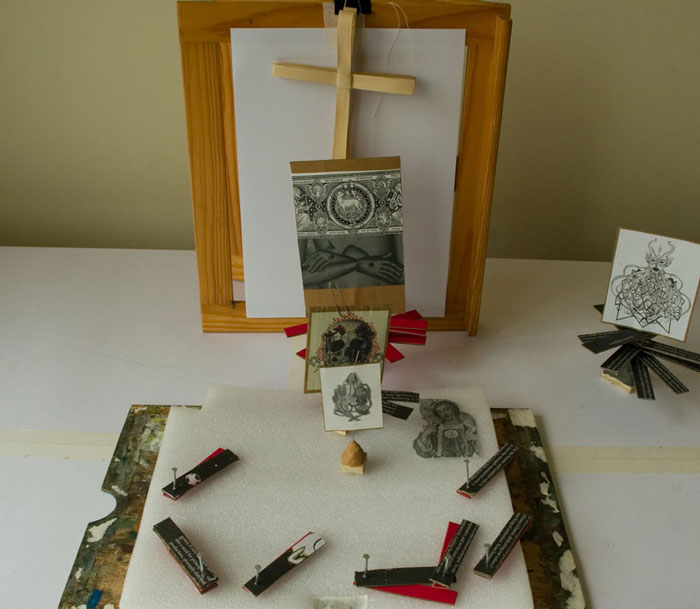
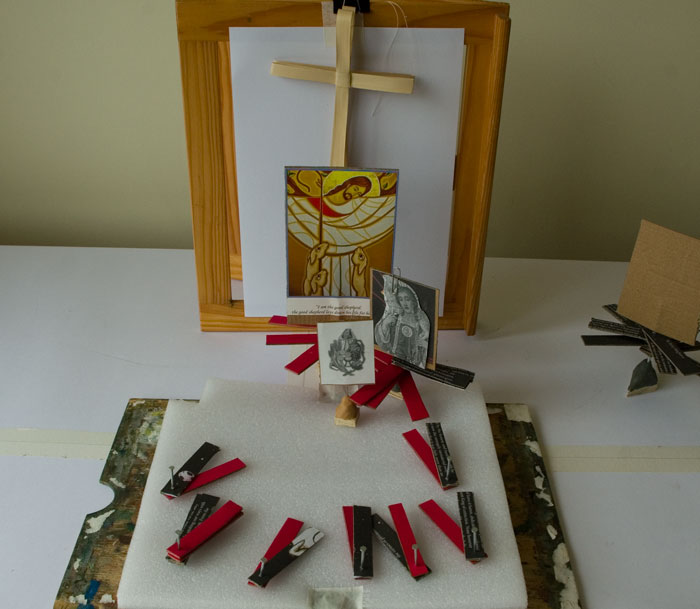
Vectors of the soul: a narcissistic church


"When ye therefore shall see the abomination of desolation,  spoken of by Daniel the prophet, standing in the holy place (whoso readeth, let him understand)"
(Matthew 24:15)


"In my paper 'Vectors and Structures' I explored how the abuse of a child, by a narcissistic parent (or other significant attachment figure) effects the relationship of an abused (grown) individual with God. This three-parts theatre investigates the mechanics of narcissistic abuse in the Church and its consequences for a soul."

Thursday, 24 May 2018

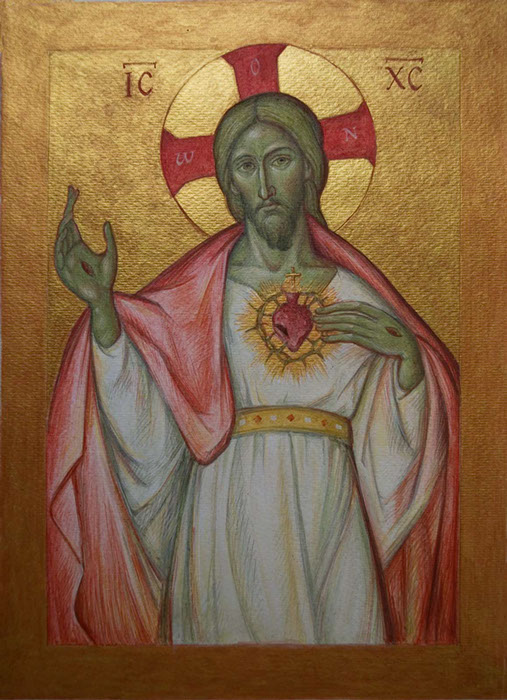
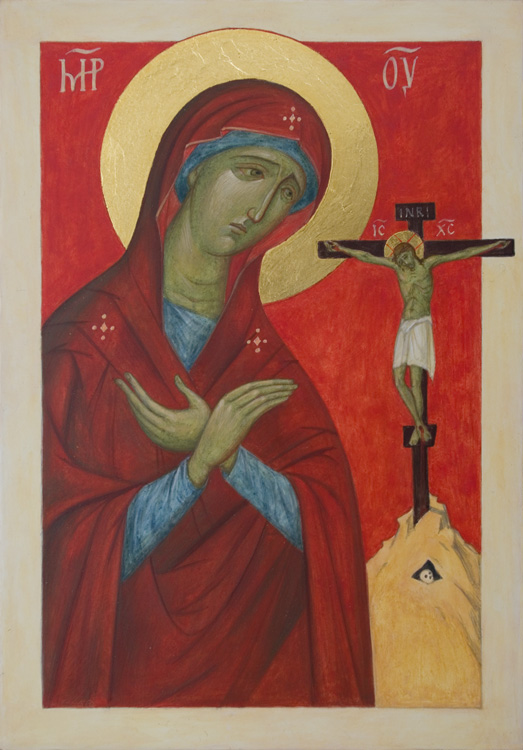
Icons are for prayer

“I am not asking you to do anything more than to look at Him” 
St Teresa of Avila ‘The Way of Perfection’


The purpose and function of an icon

It is quite common to hear that icons are “windows into heavens”. Unfortunately, this poetic metaphor has a flavour of distantly gazing, through a window, into the immeasurably far away heavens – where God is surrounded by his angels and his saints. The icon, on this take, has something to do with “beautiful enigmatic art” along with notions like “artefact”, “museum”, even “esoteric” and so on. There could be no more contrary approach to the meaning of the icon than this one.

While icon painting unites both fine art and the wealth of theology (namely Christological and Trinitarian dogmas) the first true icons (that is, not symbolic representations like lamb or fish) were born out of the simple need of a human heart, to look at the portraits of those they love. The portrait-like depictions of Jesus Christ and Virgin Mary appeared first; the dogma of the Seventh Ecumenical Council about the veneration of the holy images was second. Likewise, the prayer of a believer before an icon of Christ, true God and true man, was first – it is only centuries later that icon painting was proclaimed to be the activity that reinforces the reality of Incarnation. The active engagement with the icon was first, the dogma which defends such engagement was second.

Friday, 11 May 2018

Сердце Нового Завета

Любовь, данная опосредованно

“Вся вечность не так ценна, как тот день, в который “Песня Песней” была дана Израилю; все книги Писания святы, но Песня Песней – это Святая Святых” (Рабби Акива, 1-2 вв. н.э.)

Как это часто подчеркивается иудейскими и христианскими авторами, “Песня Песней” не похожа ни на одну книгу Ветхого Завета. Она не описывает извилистую историю человечества как “Бытие”. Она не провозглашает заповеди Бога, согласно которым Израиль должен жить, если он хочет оставаться избранным народом Божиим, как “Исход”. Она не выражает огромные боль и гнев Бога, Который вновь и вновь предается Своим народом, как книги пророков. Это правда, что некоторые пророки описывали взаимотношения Бога с Израилем в терминах брачной любви. В то время как эти термины были не просто метафорами, но указывали на метафизическую реальность, на природу любви Бога к человечеству (которая наиболее адекватно может быть описана в терминах супружеской любви), внимание пророков было сосредоточено на развертывании событий в конкретное время истории Израиля и в грядущие времена (приход Мессии). Аллюзии к божественному Супругу и неверной жене, даже блуднице, служили подобающим описанием поведения Израиля по отношению к Богу. Говоря о временах, совершенно очевидно, что книги пророков актуальны и в наше время и будут актуальны до конца времен, потому что они показывают человеческое отношение к Богу, которое, подобно идущей вниз спирали, повторяется в разные времена и так и будет повторяться – до тех пор, пока времени больше не будет. “Песня Песней”, как мне кажется, принадлежит к этой “нет-больше-времени” категории. Это есть сейчас и будет всегда, вне времени = без времени, как и любая встреча души с Богом, в любви; или двух людей в любви; или же, обобщенно говоря, двух личностей в любви.

“Песня Песней” – это олицетворение предельной кристалльной простоты. В ней нет абсолютно ничего, кроме любви двоих, непреодолимо влекомых друг к другу. Природа любви Бога к Израилю (иудаистическая интерпретация)/любовь Бога к человеческой душе и этой души – к Богу (христианская интерпретация) описана здесь на языке двух влюбленных, опьяненных взаимыми откликами. Бог открывает Себя самым простым из всех возможных методом;  его откровение о Самом Себе – это откровение о Своей сущности, Любви (Бог есть Любовь), любовно действующей на человеческую душу, которая в свою очередь, будучи созданной по образу и подобию Бога (Который есть Любовь), способна ответить Ему любовью, данной Им ей изначально. Я пытаюсь выразить, что самая сущность Бога, т.е. нечто, мысль о чем заставляет верущего содрогаться от осознания собственной малости, может быть описана посредством вполне человеческой любви-эроса, известной аблолютно всем. И не только описана, но и узнана на опыте.

Wednesday, 9 May 2018

The heart of the New Testament


Love referred

“For all of eternity in its entirety is not as worthy as the day on which Song of Songs was given to Israel, for all the Writings are holy, but Song of Songs is the Holy of Holies.” (Rabbi Akiva, 1-2 c. AD)

As it is often stated by both Jewish and Christian authors ‘Song of Songs’ is unlike any other book in the Old Testament. It does not relate the convoluted history of humanity like Genesis. It does not proclaim the rules which God wishes His people to follow if they want to remain His chosen possession like Exodus. It does not vent the enormous hurt and anger of God Who is betrayed by His people again and again like books of Prophets. It is true that several prophets described the relationship of God with Israel in spousal terms. While those terms were not a mere metaphor but hinted the metaphysical reality, the nature of love of God for humanity (which can be the most adequately described in terms of the spousal love), the focus of the prophets were the unfolding events in a particular time of history of Israel and in the future time (the coming of the Messiah). The references to the jealous divine Spouse and the unfaithful bride, even whore, where serving as an apt description of the Israel’s conduct towards God. Speaking about times, the prophet’s books are obviously relevant to our time and till the end of times because they convey the human attitude to God that, like a downfall spiral, repeats in times and will repeat itself until the time will be no more. ‘Song of Songs’, it seems to me, belongs to that “no more time” category. It is now and it will always be, out of time = timeless, as any encounter of a soul with God, in love. Or two humans in love. Or, to include both, it is two persons in love.

‘Song of Songs’ is the epitome of simplicity. There is absolutely nothing there but love between the two irresistibly drawn towards each other. The nature of love of God for Israel (Judaic interpretation)/love of God for a human soul and of this soul– for God (Christian interpretation) is described in the language of two lovers intoxicated by each other’s response. Meaning, God reveals himself in the simplest possible way here i.e. his self-revelation is about his own essence (God is Love) acting in love towards a human soul which is, being an image of God (Who is Love) is capable of answering Him with that love which He gave her in advance. What I am trying to say here is that the very essence of God i.e. something truly unthinkable, something the thought of which makes a believer tremble and shrink in realisation of own smallness, can be conveyed by the very human erotic love known to anyone. And not just conveyed but experienced as well.

Wednesday, 18 April 2018

Tuesday, 20 February 2018

Monday, 18 December 2017

Взаимные отражения [однополый "брак"]

Рождение

Данное эссе является следствием моей эмоциональной реакции на новость о только что принятом в Австралии “Законе об однополых браках”. Каким-то образом я умудрилась пропустить все предварительные дискуссии на эту тему. Разумеется, я слышала об этом феномене раньше, но никогда не соотносила услышанное с реальностью, моей реальностью; так, путешествия по Франции и Испании (странам, на тот момент уже узаконившим однополые “браки”), у меня ни разу не возникло ни одной мысли об этом. Кстати, именно это было неоднократно сказано об однополом “браке” – а именно, что он изменит реальность только для сексуальных меньшинств, но не для нормального большинства.

Wednesday, 13 December 2017

Mutual reflections [same sex "marriage"]

The birth

This paper has originated from my emotional response to learning about ‘The same sex marriage bill’ which has just been legislated in Australia. I somehow managed to miss all the preparatory talks about it. Naturally, I heard about the phenomenon before but somehow never put it in the context of reality, my reality; while traveling in France and Spain (which at that time had already endorsed same sex “marriage”) I gave no thought to it. That is exactly what is being said about same sex “marriage” by the way, that it would change only the reality of the sexual minorities and not of the straight majority.


Tuesday, 7 November 2017

Sunday, 15 October 2017

St Teresa of Avila's day


"You should take no notice of the temptation to give up prayer and should thank God for your desire of practicing it. "

Saturday, 5 August 2017

icons on paper

St Joachim & St Anna


Our Lady the  Milk Giver


Holy Face

study

[Francesco & Sperindio Cagnola]


Sunday, 16 July 2017

Our Lady of Mount Carmel, pray for us!


Wednesday, 14 June 2017

memo

"I knew perfectly well that I had a soul, but I did not understand what that soul merited, or Who dwelt within it, until I closed my eyes to the vanities of this world in order to see it. I think, if I had understood then, as I do now, how this great King really dwells within this little palace of my soul, I should not have left Him alone so often, but should have stayed with Him and never have allowed His dwelling-place to get so dirty."
'The Way of Perfection', St Teresa of Avila


Saturday, 10 June 2017

Антиприст

Не со-общающийся Христос

Верная передача значения английского слова “to relate” (“The non-relating Christ”), использованного в английском оригинале эссе, крайне важна для понимания всего текста. “Общаться” – слишком активное действие, “относиться” – слишком пассивное, и оба слова “не совсем то”, поэтому я остановилась на почти вышедшем из употребления значении слова “сообщающийся” в применении к людям, а не только к сосудам. Я нарочно пишу его как “со-общающийся”, чтобы подчеркнуть разницу, т.е. одушевленность действия.
Под выражением “со-общающийся Христос” подразумевается Христос, лично относящийся к верующему, Христос “на связи”, с Которым можно найти контакт, Который желает такого контакта, Который отвечает и обращается, одним словом, тот, с кем возможна взаимная связь/личные отношения в многообразных формах, знакомых верующим по опыту.
Проще дать аналогию: человек с нормальной психикой.

Представьте себе, как бы это выглядело. Христос воплотился бы, вырос и начал обходить крошечные городки Иудеи, чудесным образом исцеляя больных, изгоняя бесов, говоря толпам, что “блаженны нищие духом” и “подставьте другую щеку”. Он бы делал все это “в общем”, как некто с миссией донести определенные слова до слушателей. Об бы делал все, что описано в Евангелиях, но при этом никак не со-общаясь с людьми. Нет, Он не хранил  бы молчание, когда апостолы разбудили Его, испугавшись, что их лодку вот-вот перевернет бурей – Он бы просто произнес “волны, утихните” а затем, не добавив “почему вы так маловерны?”, обращенное к апостолам, вернулся бы к своему тюфяку.

Или же Он мог произнести эти слова, но очень безличностно, без какой-либо реальной эмоциональной связи со Своими учениками, сердце к сердцу. Можно ведь сказать “я люблю тебя” так, что тот, к кому эти слова обращены, почувствует, что его словно пронзили ножом, столь очевидна их ложь. Он мог бы также войти в Иерусалим предельно безличностно, без каких бы то ни было личных ремарк и, точно в такой же безличностной манере, мог бы быть распятым и умереть. Он мог бы молиться за тех, кто Его распял, но делать это пусто и безлично, просто потому, что Сын Человеческий должен сказать эти слова. Это вписывалось в Его учение. Xристанин должен молиться о своих врагах, вот Он и подал нам пример – может быть, он произнес эти слова именно по этой причине. Он мог бы сказать их про себя; в конце концов, Его Отец все равно бы Его услышал.